
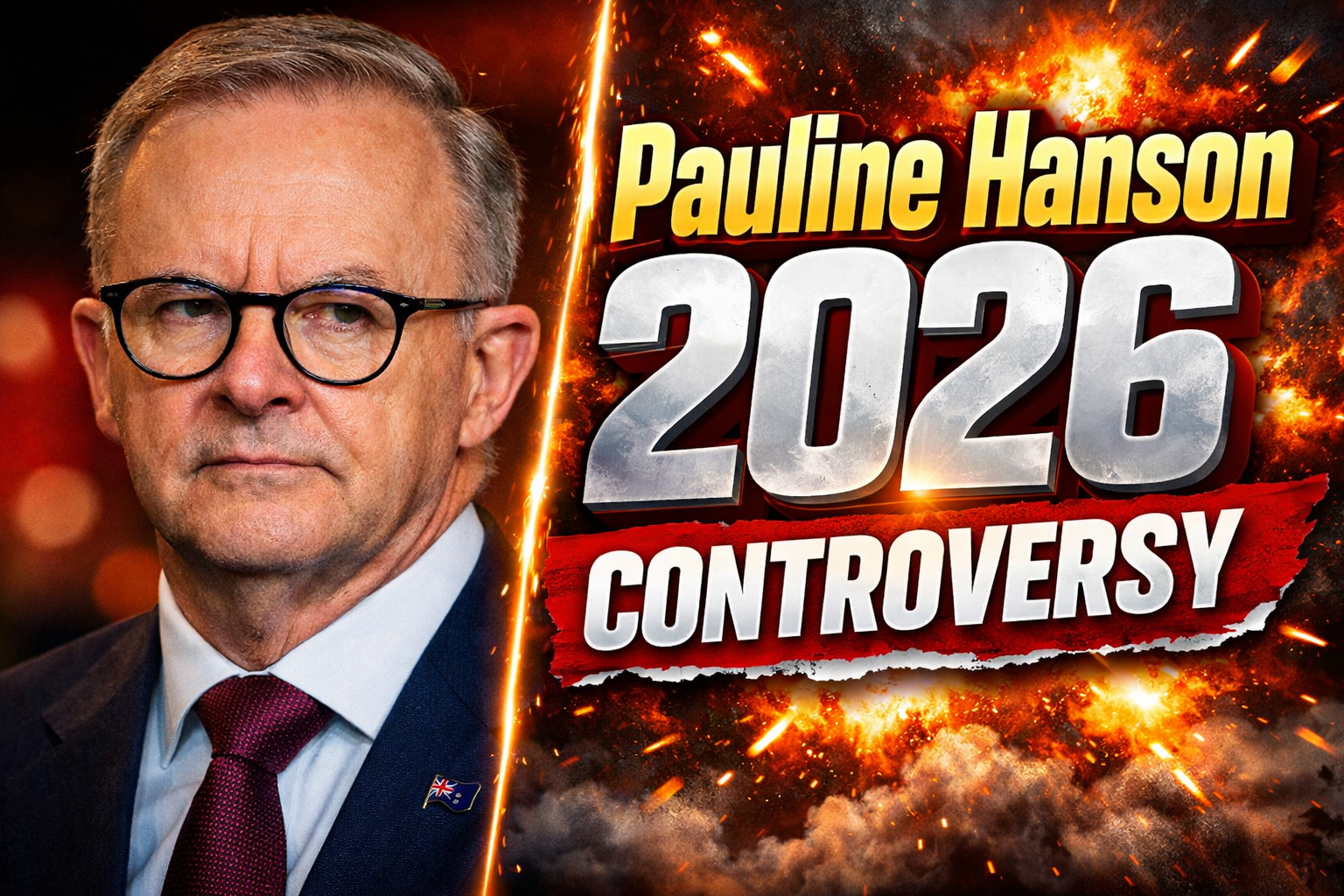
Pauline Hanson, the fiery leader of One Nation, has once again ignited a firestorm with her latest remarks targeting Australian Muslims. In early February 2026, her comments linking Muslim communities to sharia law, multiple marriages, and extremism drew sharp rebukes from all corners of society. This article delves into the unfolding drama, examining how communities and government figures have responded, revealing deep fault lines in Australia’s multicultural fabric.
Understanding Pauline Hanson
Pauline Hanson has long been a polarizing figure in Australian politics. Rising to prominence in the 1990s with her maiden speech warning of the country being swamped by Asians, she founded One Nation to champion populist causes like stricter immigration and opposition to globalization. Her party holds seats in the Senate and state parliaments, appealing to rural and working-class voters frustrated with mainstream politics.
Hanson’s career is marked by bold stunts and unapologetic rhetoric. She once wore a burqa in Parliament to protest security risks, earning a suspension. More recently, a court ruled her social media attack on a fellow senator discriminatory, ordering her to remove the post. These episodes cement her image as a defender of free speech against what she calls political correctness, but critics view her as a provocateur fueling division.
Her influence persists despite setbacks. One Nation garners around five to ten percent of the national vote in elections, enough to sway balances in hung parliaments. Supporters see her as a truth-teller on issues like housing shortages and cultural integration, while detractors accuse her of dog-whistle racism.
The Spark of the Controversy
The 2026 controversy erupted during a heated parliamentary session discussing immigration policy updates. Hanson took the floor to rail against what she described as incompatible cultural practices among Muslim migrants. She claimed Australia was at risk from those supporting sharia law, polygamy, and even harboring sympathies for groups like ISIS or a caliphate from regions like Gaza.
Her exact words, broadcast live and amplified on social media, painted Muslims as a monolithic threat unwilling to assimilate. Hanson argued that her party had once fielded a Muslim candidate, but refused a blanket apology, offering only a conditional one to those not endorsing what she deemed radical views. This came amid ongoing debates over refugee intakes and border security, heightened by global tensions.
Media outlets pounced immediately. Headlines screamed of bigotry, with viral clips racking up millions of views. The timing was explosive, coinciding with multicultural festivals in major cities and just months before potential by-elections. Hanson’s refusal to back down, doubling down in radio interviews, prolonged the saga and intensified scrutiny.
Community Backlash and Support
Australia’s Muslim communities, numbering over six hundred thousand, felt the sting most acutely. Leaders from the Australian National Imams Council condemned the remarks as dehumanizing, urging followers to report hate incidents. Protests sprang up in Sydney and Melbourne, with banners reading “Hanson Divides, Unity Heals.” Advocacy groups like the Islamophobia Register noted a spike in online abuse following her speech.
Multicultural organizations piled on. The New South Wales Minister for Multiculturalism labeled the comments bigoted and wrong, emphasizing Australia’s success as a migrant nation. Community forums hosted emergency panels, where speakers shared stories of families feeling unwelcome despite generations of contribution. Social media campaigns trended under hashtags calling for her censure, amassing hundreds of thousands of posts.
Yet, Hanson retains a loyal base. Supporters flooded her pages with praise, arguing she voices concerns about welfare strain and cultural clashes suppressed by elites. Rural towns and online forums echoed this, with petitions defending her right to speak. Polls showed a segment of voters, particularly in Queensland, unmoved or even more supportive, viewing the outrage as manufactured.
Voices from Government
Government responses were swift and damning. Senator Matthew Canavan, a rival conservative, declared Hanson unfit to lead, citing her pattern of unrepentant provocation offending hundreds of thousands. Prime Minister’s office issued a statement reaffirming commitment to inclusive values, while avoiding direct endorsement of One Nation policies.
Labor figures led the charge. The Senate leader moved motions highlighting prejudice, passing overwhelmingly. Opposition leaders distanced themselves, with one calling the remarks reprehensible and a distraction from real policy debates. State premiers in Victoria and Queensland echoed this, warning of rising tensions in diverse electorates.
Legal shadows loomed large. Activists invoked the Racial Discrimination Act, drawing parallels to Hanson’s prior court loss over telling a senator to return to Pakistan. Human rights commissioners signaled readiness to investigate complaints, potentially tying up One Nation in litigation.
Stats and Facts in Focus
Numbers paint a stark picture of the stakes. Australia’s Muslim population has grown steadily, from three percent in 2011 to nearly four percent today, driven by skilled migration and family reunions.
| Aspect | Statistic | Context |
|---|---|---|
| Muslim Population | 650,000+ | 3.5% of total population |
| Hate Crimes Post-Speech | 40% increase | Reported incidents in first week |
| One Nation Polling | 7-9% national support | Steady despite controversies |
| Immigration Intake | 190,000 annually | Focus of Hanson’s critiques |
| Court Rulings Against | 2 major cases since 2022 | Discrimination findings |
Hate speech reports surged, with over two hundred logged in the immediate aftermath, per government trackers. Voter surveys indicated twenty percent of Australians shared some of Hanson’s integration worries, though most rejected her delivery. Economic data showed migrants, including Muslims, contributing billions in taxes, countering strain narratives.
These figures underscore the controversy’s resonance. While Hanson highlights real pressures like housing waits averaging six months in cities, data debunks blanket threats, with crime rates among migrants below native averages.
Wider Political Ripples
This episode exposes fractures in Australia’s body politic. One Nation positions itself as anti-establishment, gaining traction amid cost-of-living woes and perceived elite disconnects. Yet, mainstream parties use such outbursts to rally their bases, framing Hanson as extreme.
Multiculturalism policy faces tests. Governments tout success stories—over half of Australians have migrant heritage—but incidents like this fuel review calls. Social media amplifies everything; algorithms pushed Hanson’s clip to millions, sparking global coverage from outlets in the UK and US.
For women in politics, it highlights gendered scrutiny. Hanson leverages her outsider status, but faces amplified backlash. Internationally, parallels emerge with populist figures elsewhere, questioning free speech versus harm balances.
Shaping the Future Debate
Pauline Hanson’s 2026 controversy lays bare Australia’s cultural tug-of-war. Communities mobilize for unity, governments draw lines, and her base digs in. As legal battles brew and polls shift, the nation watches whether this cements her as martyr or marginalizes her further.
The real test lies in dialogue. Bridging divides requires addressing legitimate fears without vilification. Hanson may thrive on outrage, but sustained response from all sides could steer discourse toward policy over personality. In a land built by migrants, this moment challenges everyone to uphold shared values amid passionate disagreement.

Lance Evans is a contributor at CSKHYBER.co.nz covering New Zealand and Australia news, with a focus on trending updates and public-interest stories.