

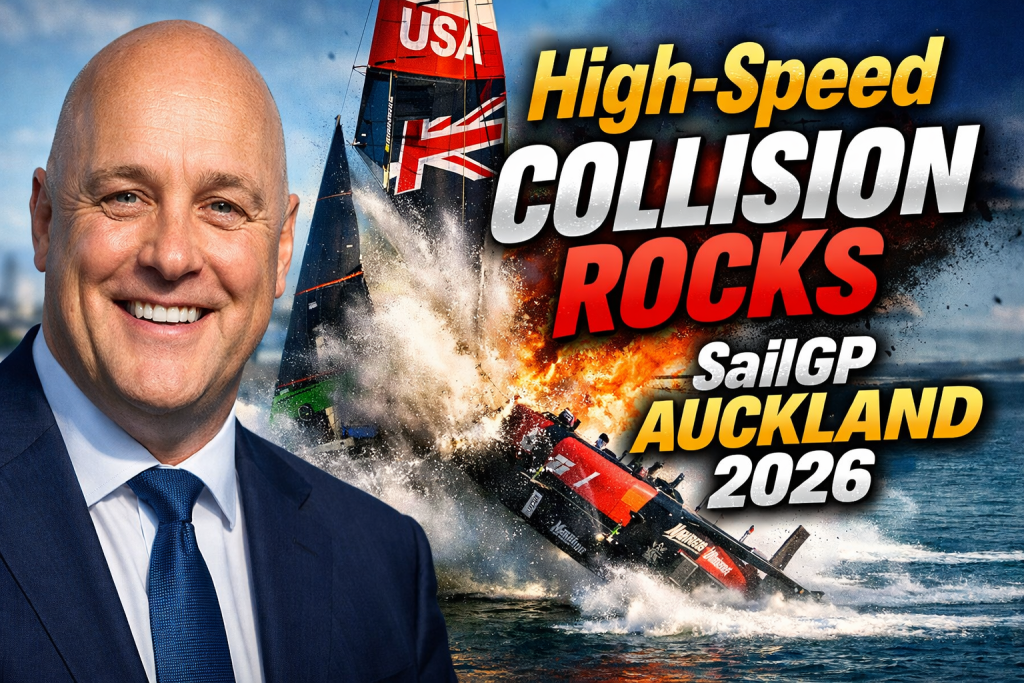
The high-stakes world of SailGP was shaken to its core during the Auckland event in 2026, when a dramatic collision between two elite teams halted racing and sent shockwaves through the sailing community. This incident not only highlighted the raw speed and peril of these futuristic catamarans but also sparked urgent conversations about safety protocols in one of the planet’s most extreme watersports.
Event Background and Context
SailGP Auckland 2026 marked a milestone in the series, featuring an unprecedented thirteen teams battling it out in the tight confines of Waitematā Harbour. Known for its shifty winds and gusty conditions, Auckland’s waters have long tested even the most seasoned sailors. The event, branded as the ITM New Zealand Grand Prix, drew massive crowds eager to witness F50 catamarans hurtling across the waves at blistering speeds often exceeding ninety kilometers per hour.
These carbon-fiber beasts, with their winged hydrofoils lifting hulls clean out of the water, represent the pinnacle of technological innovation in sailing. The 2026 season had already built intense anticipation, with teams pushing boundaries in pursuit of the championship title. Yet, the harbor’s narrow course—among the tightest on the calendar—amplified risks, setting the stage for high drama on the opening day.
Organizers had boasted perfect conditions initially, with winds around thirty-two kilometers per hour whipping up excitement. Little did spectators know that Race Three would transform thrill into tragedy, underscoring the fine line between spectacle and danger in professional foiling.
Moment-by-Moment Breakdown of the Crash
The collision unfolded in mere seconds during the reach to the first mark in Race Three. New Zealand’s Black Foils, skippered by a veteran driver, started strong near the leeward end of the line alongside France’s DS Team. Both boats surged forward at peak velocities nearing one hundred kilometers per hour, foils slicing through choppy waters with precision.
Eyewitness footage captured the pivotal moment: the New Zealand catamaran suddenly lost traction, its rudder failing amid gusty shifts. The boat nosedived, spun sharply to the right, and veered directly into France’s path. Unable to maneuver in time, the French F50’s bow slammed into the New Zealand hull, while the wing structure crumpled on impact. The vessels entangled in a tangle of debris, halting abruptly as safety boats rushed in.
This wasn’t a glancing blow; structural damage was evident immediately, with one platform partially dislocated and foils mangled beyond recognition. Speeds of up to fifty knots amplified the force, turning a routine leg into one of SailGP’s most harrowing on-water incidents.
Teams and Crew Involved
New Zealand’s Black Foils entered the event as local favorites, fresh off a strong showing earlier in the season despite a prior scrape in Perth. Their crew, a mix of homegrown talent and international grinders, embodied national pride on home turf. France’s DS Team, led by a rising star driver, had been climbing the leaderboard with aggressive tactics and flawless execution.
The Black Foils crew included a grinder who bore the brunt of the impact, suffering injuries that required hospital attention. French team members escaped with minor shakes, but their boat’s forward section absorbed devastating punishment. Both squads withdrew from the remaining races, leaving the fleet shorthanded and the event’s narrative forever altered.
Injury Details and Medical Response
Two sailors were hospitalized following the smash, both reported in stable condition upon arrival. The most severe case involved a New Zealand grinder with injuries to both legs, stemming from the violent entanglement of the boats. Medical teams activated emergency protocols swiftly, ferrying the injured via rapid intervention RIBs to shore before ambulance transfer.
On-site medics stabilized the victims amid the chaos, prioritizing spinal and limb assessments given the high-impact nature. No life-threatening issues emerged, a testament to quick response times and crew conditioning. Recovery timelines remain fluid, but experts anticipate months of rehab for the leg injuries, sidelining key players from upcoming regattals.
Immediate Aftermath and Race Cancellation
Racing ground to a halt for the day, with Day One abandoned entirely. Recovery operations for the damaged F50s stretched into the evening, cranes and divers working under floodlights in Auckland’s busy harbor. Organizers postponed remaining fleets, shifting focus to investigations and crew welfare.
The decision rippled through the schedule, compressing subsequent days and testing contingency plans. Spectators, many donning team gear, watched in stunned silence as helicopters whirred overhead, airlifting equipment and personnel.
Historical Context of SailGP Collisions
SailGP’s six-year history is dotted with close calls, but few match this scale. An earlier Perth clash involving New Zealand and Switzerland drew demerit points for the Kiwi skipper, highlighting recurring rudder vulnerabilities. High-speed foiling inherently courts disaster, with past incidents yielding penalties but rarely such physical tolls.
Auckland’s crash stands out for its visibility—broadcast live to millions—elevating scrutiny on the series’ risk profile. Comparable wingsail failures have occurred in training, yet competitive waters amplify stakes.
Safety Measures in SailGP
SailGP mandates rigorous protocols: reinforced hulls, impact-absorbing cockpits, and real-time telemetry monitoring speeds and foil angles. Crews drill escape maneuvers weekly, donning helmets and flotation gear standard. Post-crash, yellow-flag zones enforce no-go buffers around incidents.
Yet gaps persist; tight courses limit evasion windows, and gusty harbors challenge predictive tech. Virtual reality sims now train for spin-outs, but real-world variables like rudder snap remain unpredictable foes.
Expert Analysis on Collision Causes
Veteran analysts point to a rudder malfunction as primary culprit, exacerbated by shifty winds exceeding forty knots in gusts. Foil delamination under load likely triggered the spin, a known wear issue in F50s logging thousands of kilometers. Driver error played minimal role; evasive action was impossible at those velocities.
Data logs from onboard sensors will dissect angles and forces, informing hull redesigns. Engineers note that ninety-plus km/h impacts equate to car wrecks, underscoring material limits.
| Factor | Description | Contribution to Incident |
|---|---|---|
| Speed | Up to 100 km/h on foils | High kinetic energy on impact |
| Wind Conditions | 32 km/h average, gusty shifts | Induced loss of control |
| Course Layout | Tight harbor turns | Limited evasion space |
| Equipment | Rudder/foil stress | Probable failure point |
| Team Positioning | Leeward start proximity | Inescapable collision path |
Impact on Championship Standings
Both teams’ withdrawal scrambles the leaderboard, handing advantages to frontrunners like Australia and the USA. New Zealand drops points crucial for home glory, while France’s momentum stalls mid-season. Standings now hinge on Dubai and subsequent legs, with substitutes unlikely given F50 scarcity.
Season-long points tally, typically rewarding consistency, faces wildcard disruption. Bookies adjust odds, factoring repair timelines and psychological tolls.
Voices from the Teams and Drivers
New Zealand’s skipper expressed relief at crew survival, vowing deeper safety probes. France’s driver lamented the “unavoidable” hit, praising medics’ speed. “Seconds decided everything,” one grinder recounted, legs bandaged but spirits resilient.
Quotes flooded social feeds: “Sailing’s beauty hides its brutality,” noted a French tactician. Solidarity messages poured from rivals, uniting the fleet.
Broader Implications for High-Speed Sailing
This crash spotlights foiling’s double-edged sword: spectator magnetism versus athlete peril. Insurers eye premiums hikes, while sponsors reassess vis-a-vis extreme sports like Formula E. Youth programs may hesitate, fearing parental pushback.
Yet innovation thrives on edges; past wrecks birthed tougher composites. Auckland could catalyze global sailing safety summits.
Fan and Community Reactions
Social media erupted with footage shares, hashtags trending locally and abroad. Kiwi fans rallied support outside hospitals, while global pundits debated foiling’s future. Petitions for wider courses gained traction, blending grief with calls for evolution.
Podcasts dissected replays, fans praising transparency over cover-ups.
Future Safety Reforms Under Consideration
League officials mull expanded sim training, AI wind forecasting, and foil redundancies. Wider gate spacing and speed governors in harbors loom large. Independent audits of rudders post every event could preempt failures.
Crew input drives change; anonymous feedback portals expand. By season’s end, prototype upgrades may debut, blending speed with sanctity.

Lance Evans is a contributor at CSKHYBER.co.nz covering New Zealand and Australia news, with a focus on trending updates and public-interest stories.