
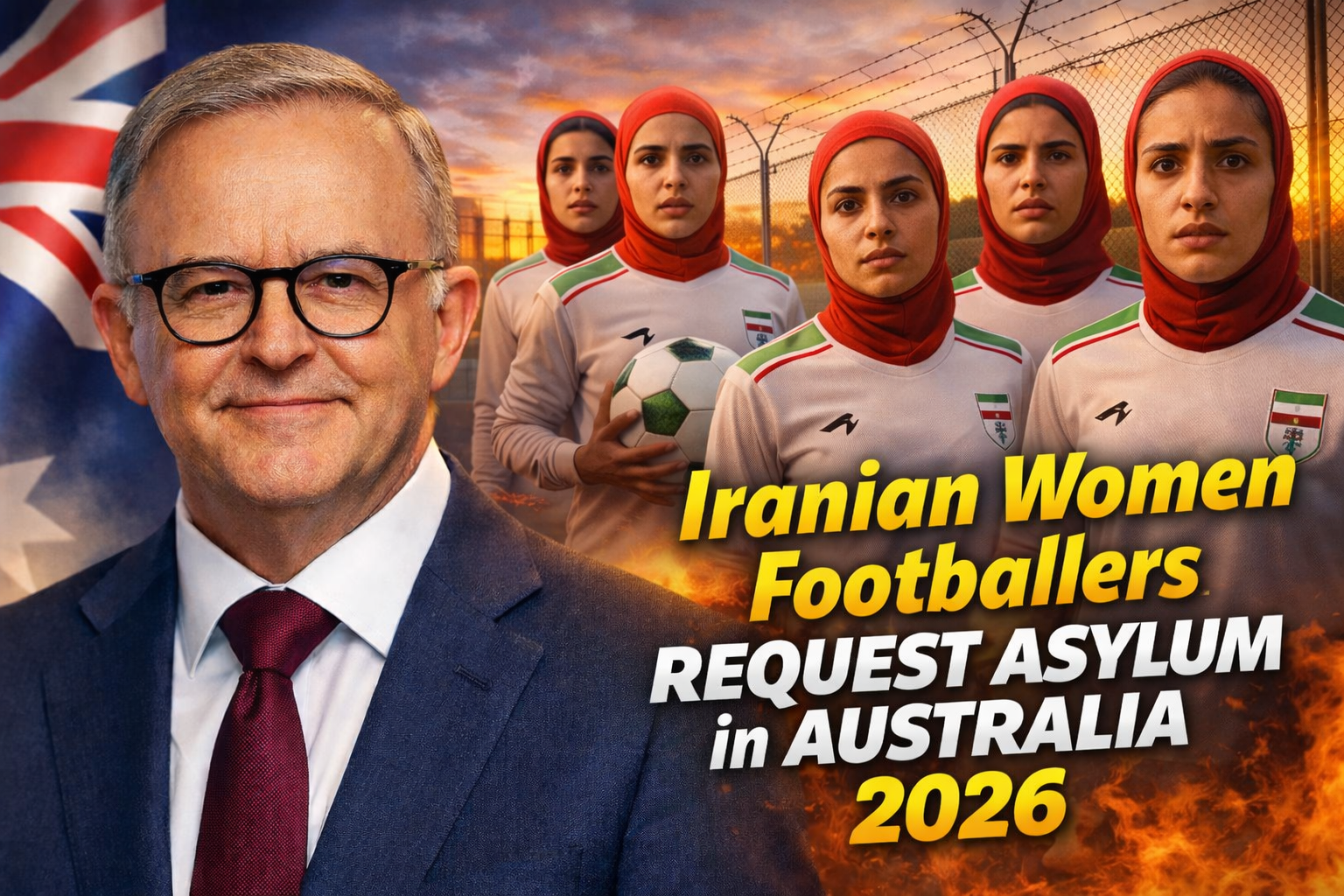
Seven members of Iran’s national women’s football team have sought and received humanitarian visas in Australia during the Women’s Asian Cup, sparking a global spotlight on the perilous realities facing female athletes under Tehran’s repressive regime. Their bold stand—not singing the national anthem before a match—branded them traitors at home amid wartime chaos, prompting swift Australian intervention to shield them from likely persecution.
The Asian Cup Incident That Sparked Defiance
Iran’s squad arrived Down Under for the Women’s Asian Cup on the Gold Coast, facing South Korea in their opener. As the anthem played, several players stood silently, lips unmoving—a silent protest echoing years of suppressed dissent against mandatory hijab laws and gender restrictions in sports. Conservative Iranian media erupted, labeling them wartime deserters deserving harsh punishment, especially as US-Iran hostilities escalated.
The match itself ended in defeat, but the real fallout brewed off-field. Team captain Zahra Ghanbari and others faced immediate threats via state broadcasts, with commentators demanding arrests upon return. Iranian exile Reza Pahlavi amplified their plight online, hailing their courage while warning of imprisonment or worse. Protests by Iranian-Australians outside their hotel underscored fears, blocking departure and alerting authorities.
This defiance mirrored past incidents, like the 2022 national team anthem snub during World Cup qualifiers, but wartime context amplified risks exponentially.
Australia’s Rapid Humanitarian Response
Home Affairs Minister Tony Burke announced the asylum grants on Wednesday, confirming five players initially sought protection Tuesday night at Sydney Airport. Federal police discreetly separated them from handlers and Iranian officials, offering private consultations with interpreters. Two more—a player and staffer—joined Wednesday, bringing the total to seven on temporary humanitarian visas akin to those for Ukrainians and Afghans.
Burke shared photos of the women, now hijab-free, celebrating with chants of “Aussie Aussie.” These one-year visas pave paths to permanent residency, with safe houses providing immediate security. Prime Minister Anthony Albanese revealed a pre-dawn call from US President Donald Trump urging protection, though preparations predated it. “Australians are touched by these courageous women,” Albanese stated. “They are safe here and should feel at home.”
The remaining squad departed amid airport drama, one additional player briefly accepting then reversing asylum to rejoin family.
Profiles of the Asylum Seekers
Captain Zahra Ghanbari, 28, led the anthem protest, her leadership forged in Iran’s underground women’s leagues under constant surveillance. Midfielder Sara Hammuri, 24, escaped prior morality police arrests for unveiled training. Defender Leila Gandari, 26, and forwards Neda Khalili and Mina Rostami represent a core group risking elite careers—and lives—for freedom.
Staffer Fatima Azizi, a physiotherapist, witnessed teammates’ traumas firsthand. All hail from Tehran or Isfahan, navigating regime-approved sports while harboring reformist views. Their athletic prowess—Ghanbari’s 15 international goals—contrasts with personal sacrifices, like family estrangements.
| Player/Staff | Age | Position/Key Role | Notable Background |
|---|---|---|---|
| Zahra Ghanbari | 28 | Captain/Midfielder | Anthem leader, prior protest history |
| Sara Hammuri | 24 | Midfielder | Escaped morality police in 2024 |
| Leila Gandari | 26 | Defender | Isfahan native, family dissidents |
| Neda Khalili | 23 | Forward | Top scorer in domestic league |
| Mina Rostami | 25 | Forward | Tehran underground training |
| Fatima Azizi | 30 | Physiotherapist | Witnessed team harassment |
| Unnamed Player | 22 | Substitute | Youngest, recent national debut |
These women embody Iran’s “Woman, Life, Freedom” movement, blending athleticism with activism.
Broader Persecution of Women in Iranian Sports
Iranian authorities long weaponize sports against dissent. Women’s teams endure hijab mandates, segregated facilities, and morality patrols at stadiums. The 2022 Mahsa Amini death ignited protests, leading to athlete arrests—like climber Elnaz Rekabi for competing unveiled.
Football faces acute scrutiny: the women’s league operates under Islamic Revolutionary Guard oversight, with players monitored for “Western influences.” Wartime escalates dangers—state media vows crackdowns on “traitors undermining morale” amid US strikes. Returnees face interrogations, travel bans, or prison; some whisper of honor killings.
Global parallels include volleyball players defecting in 2023 or boxers seeking refuge in Europe. Iran’s FIFA ranking plummets as talent flees, yet regime clings to symbolic victories.
Geopolitical Backdrop and Timing
The asylum bids coincide with heightened US-Iran conflict under Trump’s second term, including embassy strikes and Hormuz tensions. Iranian state TV framed the anthem silence as sabotage amid national crisis, amplifying traitor labels. Australia’s involvement draws Tehran ire, with ambassadors summoned and threats of retaliation.
Trump’s personal intervention—calling Albanese post-match—elevates the saga, tying women’s rights to alliance solidarity. Iranian Australians rallied, waving pre-revolution flags and chanting for regime change.
Reactions from Governments and Organizations
Albanese hailed a humanitarian triumph, defending against Greens’ criticisms that new visa restriction laws contradict openness. Burke emphasized no coercion: “They chose freely.” Opposition praised swift action but probed delays.
Iran condemned Australia as harboring dissidents, vowing diplomatic fallout. FIFA stayed neutral, focusing on tournament play.
Human rights groups like Amnesty International lauded the move, urging permanent status. Iranian diaspora celebrated with vigils in Sydney and Melbourne. Reza Pahlavi tweeted gratitude, pledging support.
| Stakeholder | Stance |
|---|---|
| Australian Gov | Full support, visas granted |
| Iranian Gov | Condemns as interference, threats issued |
| Greens Party | Welcomes but slams visa restriction bill |
| Amnesty Intl | Praises, calls for global athlete protections |
| Iranian Diaspora | Jubilation, protests for regime change |
Challenges Ahead for the Women
Integration begins: language classes, mental health support, and job training via sports programs. Permanent residency hinges on proving persecution fears—straightforward given media backlash. Family separations weigh heavy; some left siblings behind.
Career futures brighten—Australia’s W-League eyes recruits, with Matildas stars offering mentorship. Yet stigma lingers: Iranian federations may strip citizenship or blacklist relatives.
Psychological tolls demand care: trauma from regime threats, exile guilt, and spotlight pressure. Community networks in Sydney’s Iranian hubs provide solace.
Impacts on Women’s Sports in Iran
Defections expose regime control’s futility, inspiring domestic athletes. FIFA pressures Iran on hijab bans, risking suspensions. Talent drain accelerates—more may seek exits at future tournaments.
Positive ripples: underground leagues gain recruits, protests swell. Globally, it spotlights athlete asylum precedents, from Belarus gymnasts to Afghan cricketers.
International Precedents and Legal Framework
Australia’s humanitarian visas fast-track protection for targeted groups, bypassing refugee quotas. Similar cases: Turkish swimmers in 2023, Sudanese runners post-coup.
UNHCR backs such interventions, citing non-refoulement principles barring returns to harm. Iran’s gender apartheid classification strengthens claims.
Community Support and Integration Efforts
Sydney’s Iranian community mobilizes: housing donations, job leads in fitness sectors. Football clubs host friendlies, Matildas captain Sam Kerr publicly welcomes them. Crowdfunding hits 100,000 dollars for settlement.
Government partners NGOs for trauma counseling, English courses. Long-term: citizenship paths open doors to national teams.
Future Tournaments and Diplomatic Ramifications
Asian Cup proceeds sans defectors, but Iran’s campaign falters under scrutiny. FIFA may mandate neutral venues for Tehran-hosted events. Australia faces trade spats, yet human rights stance bolsters soft power.
Broader calls emerge: blanket athlete protections at multi-nation events, safe passage guarantees.
Broader Human Rights Context
This saga underscores Iran’s crackdown since 2022 protests: thousands arrested, executions surging. Women athletes symbolize resistance, paying dearly. Australia’s refuge reinforces its humanitarian leadership amid regional tensions.
Global solidarity grows—European clubs offer trials, US leagues scout talent. These footballers transcend sport, embodying fight for dignity.
Path Forward for the Players
Ghanbari eyes coaching badges, Hammuri trials with Western Sydney Wanderers. Permanent visas by 2027 enable stability. Families may reunite via family streams.
Their story inspires: from silent anthem to new national team hopefuls. Australia gains warriors, Iran loses symbols—but global eyes watch Tehran closely.
In granting asylum, Australia not only saves lives but amplifies voices against oppression. These women kick forward, proving fields hold power beyond goals.

Lance Evans is a contributor at CSKHYBER.co.nz covering New Zealand and Australia news, with a focus on trending updates and public-interest stories.