
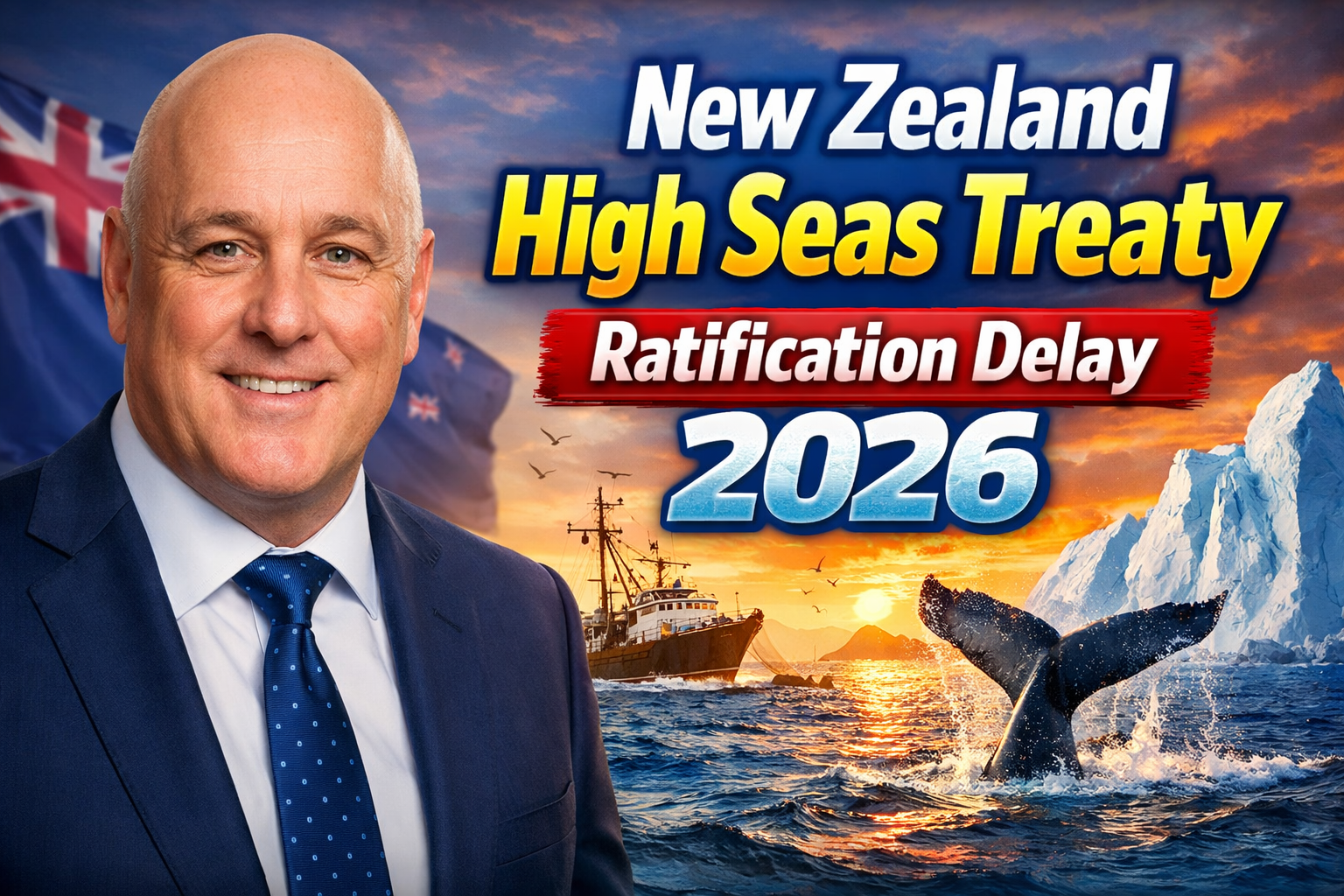
Oceans cover nearly three-quarters of Earth’s surface, yet vast high seas areas beyond national boundaries remain largely unprotected, vulnerable to overfishing, pollution, and climate threats. The High Seas Treaty, formally known as the Agreement under the United Nations Convention on the Law of the Sea on the Conservation and Sustainable Use of Marine Biological Diversity of Areas beyond National Jurisdiction—or BBNJ—aims to change that by establishing marine protected areas, sharing genetic resources, and conducting environmental impact assessments on the high seas. New Zealand, an early signer with a massive exclusive economic zone, finds itself sidelined in early 2026 as the treaty takes effect, its domestic ratification process stalled amid bureaucratic hurdles and policy debates.
This delay strips the country of voting rights at pivotal UN meetings, handing leadership reins to smaller Pacific neighbors and Indigenous voices championing holistic ocean stewardship. While the treaty entered force after reaching the required 60 ratifications late last year, New Zealand attends as an observer, watching others shape rules for shared waters critical to its fishing industry, biodiversity, and climate resilience. The standoff underscores tensions between national priorities and global obligations, with Pacific Indigenous leaders filling the void through ancestral knowledge and bold action.
Understanding the BBNJ Agreement
Negotiated over nearly two decades and adopted in 2023, the BBNJ builds on the UN Convention on the Law of the Sea framework, targeting areas outside national jurisdictions—about two-thirds of the ocean. Key pillars include establishing protected zones to halt destructive practices like bottom trawling, equitable benefit-sharing from marine genetic resources used in pharmaceuticals, and mandatory assessments for activities risking biodiversity. For island nations like those in the Pacific, this means safeguarding migratory species, deep-sea ecosystems, and carbon-sequestering waters amid rising seas and warming currents.
The treaty’s genius lies in its collaborative approach: decisions require consensus at the Conference of the Parties, where voting rights hinge on ratification. Nations that ratify gain full say in designating protected areas and tech transfers, while signatories without ratification linger on the sidelines. New Zealand’s vast ocean territory—its exclusive economic zone spans 15 times its landmass—positions it as a natural leader, yet internal delays risk ceding influence to agile Pacific partners already protecting vast swaths of their waters.
New Zealand’s Ratification Roadblocks
New Zealand signed the treaty promptly in 2023, signaling commitment, but ratification demands parliamentary approval and alignment with domestic laws on fishing, mining, and conservation. By February 2026, Foreign Affairs Minister Winston Peters cited pending ministry advice as the holdup, with officials scrutinizing implications for sectors like deep-sea mining and commercial fisheries. Critics argue the coalition government’s pro-industry tilt—fast-tracking seabed approvals and easing fishing regulations—clashes with the treaty’s stringent environmental standards.
Domestic politics play a role too: environmental groups decry weakened protections in the Hauraki Gulf and rising catch limits for species like orange roughy, suggesting reluctance to bind hands internationally. Māori iwi with customary marine rights add complexity, demanding integration of tikanga into high seas governance. This stall contrasts sharply with New Zealand’s historical advocacy during treaty drafting, where it pushed for strong biodiversity measures, leaving observers puzzled at the foot-dragging.
Voting Rights Vacuum at the UN
Without ratification, New Zealand forfeits voting privileges at the April 2026 UN sessions crafting foundational BBNJ rules—from protected area criteria to funding mechanisms. As an observer, it can speak but not vote, diminishing clout in a forum where Pacific small states punch above weight. This mirrors broader trends: 74 nations had ratified by late 2025, including EU members and developing countries, triggering the treaty’s January 2026 entry into force via a 120-day countdown from the 60th ratification.
The loss stings for a trade-dependent economy reliant on sustainable oceans. Voting rights ensure input on rules affecting transboundary stocks vital to Kiwi exports, from hoki to kiwi superfoods derived from marine biotech. Pacific allies like Niue, protecting 100% of its waters, now lead nominations for high seas sanctuaries overlapping New Zealand’s sphere, potentially reshaping regional dynamics without Wellington’s formal buy-in.
| Ratification Category | Nations Involved | Key Impacts on New Zealand |
|---|---|---|
| Early Ratifiers (Pre-2025) | Morocco, Sierra Leone (60th triggers) | Accelerates global enforcement New Zealand must adapt to |
| Pacific Leaders | Niue, Smaller Islands | Fills NZ leadership gap, influences regional MPAs |
| Major Economies | EU Bloc, Denmark (excl. territories) | Sets precedents for tech/funding NZ later adopts |
| Holdouts like NZ | Signatories sans ratification | Observer status, no vote on core rules |
Pacific Indigenous Leadership Emerges
Pacific Indigenous voices, from Kanaka Maoli in Hawaii to Māori and Pasifika leaders at Taupō gatherings, are redefining high seas advocacy. Figures like Nai’a Lewis critique the treaty’s narrow focus on water columns over holistic seafloor-water connections, urging ancestral methods for Te Moananui-ā-Kiwa (Pacific Ocean). Niue’s Shiloh-Faithe Pasisi champions “right voices from the get-go,” with her nation modeling full-water protections that inspire global action.
At Taiātea forums, leaders transcend borders, blending mātauranga Māori with kanaka maoli practices for prosperity without exploitation. This resurgence counters colonial legacies, positioning Indigenous knowledge as vital for treaty implementation—monitoring via community tech, sacred site protections, and climate-resilient fishing. New Zealand’s delay amplifies their platform, as unratified states watch Pacific unity drive MPA expansions vital for shared tuna stocks and coral resilience.
Economic and Environmental Stakes
New Zealand’s ocean economy—worth billions in fisheries, tourism, and biotech—hangs in balance. High seas host uncharted biodiversity fueling innovations like algae-based fuels, but threats loom: illegal fishing poaches stocks, mining scars seabeds, and warming bleaches corals. Ratification delay risks unregulated activities spilling into its exclusive economic zone, the world’s fifth-largest, amplifying vulnerabilities for a low-lying nation facing sea-level rise.
Environmentally, the treaty could shield migratory paths for whales and seabirds central to Māori lore, while economically ensuring fair shares from genetic patents. Stats highlight urgency:
| Sector | Annual Value to NZ | High Seas Dependency |
|---|---|---|
| Fisheries | $4B+ exports | 30% of catches migratory |
| Tourism | $10B pre-COVID | Whale watching, dive sites |
| Biotech | Emerging $500M | Marine compounds for meds |
| Mining Potential | $1B+ seabed nodules | Regulated by BBNJ rules |
Prolonged delay invites competitors to dominate resource talks, eroding New Zealand’s edge.
Global Ratification Momentum
Worldwide, momentum surges: from 60 ratifications triggering force to over 74 by early 2026, including unlikely bedfellows like landlocked nations eyeing benefits. The EU’s bloc ratification counts strategically, while Pacific minnows like Niue outpace giants. New Zealand’s observer role echoes hesitations elsewhere—Australia deliberates similarly—but contrasts bold moves by Chile and Costa Rica, who ratified swiftly to lead Latin American efforts.
This patchwork tests treaty efficacy: without universal buy-in, enforcement gaps persist, but early movers set ambitious precedents.
Stakeholder Voices and Tensions
Pacific leaders like Sheridan Waitai emphasize enduring moana relationships over treaties alone: “We have proven methods for prosperity.” Foreign Minister Peters deflects with “waiting for materials,” frustrating greens who see industry capture. Māori advocates push for iwi vetoes on MPAs affecting taonga species, while fishers fear catch curbs.
UN experts hail Pacific Indigenous input as “game-changing,” blending science with lore for adaptive governance. Economists warn unratified states risk trade barriers from eco-certified imports.
Pathways to Resolution
Ratification could unlock via streamlined advice to cabinet, perhaps tying to Māori co-governance models. Regional pacts with Niue and Samoa might bridge gaps, pooling votes for Pacific MPAs. Binding arbitration or public pressure from Taiātea could nudge action, restoring New Zealand’s seat before rules ossify.
Long-term, integrating BBNJ with domestic reforms—like camera mandates on boats—builds credibility.
Global Lessons in Ocean Diplomacy
New Zealand’s saga illustrates ratification pitfalls: early enthusiasm yielding to domestic inertia, ceding ground to Indigenous agility. It spotlights Pacific leadership transcending size, proving ancestral wisdom scales globally. As high seas rules solidify, the treaty heralds a protected blue planet—but only if laggards like New Zealand join the chorus, harmonizing national interests with oceanic unity for generations ahead.

Lance Evans is a contributor at CSKHYBER.co.nz covering New Zealand and Australia news, with a focus on trending updates and public-interest stories.