
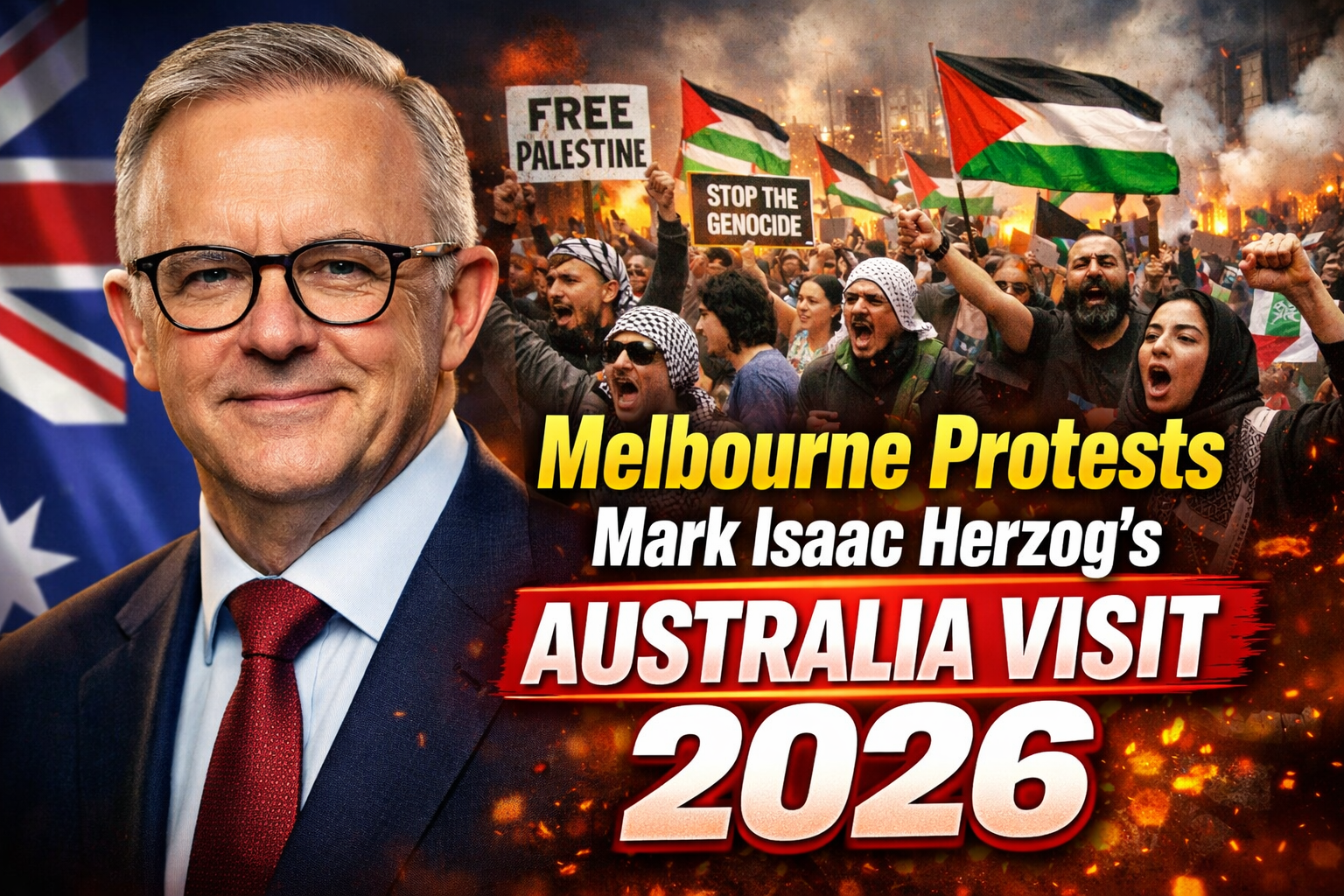
Israeli President Isaac Herzog’s visit to Australia in early February 2026 stirred significant unrest, particularly in Melbourne, where large-scale protests erupted amid tight security. Triggered by the aftermath of a tragic antisemitic attack in Sydney, the trip highlighted deep divisions over international conflicts and local sensitivities.
Background on the Triggering Event
The visit stemmed directly from a horrific terrorist attack at Bondi Beach in Sydney on December 14, 2025. During a Hanukkah celebration, gunmen opened fire on a Jewish community gathering, killing twelve people, including children and one of the attackers, while injuring dozens more. Eyewitnesses described chaos as gunfire echoed across the iconic beach, initially mistaken for fireworks by some beachgoers.
This ISIS-inspired assault, involving homemade bombs that failed to detonate, shocked Australia and was classified as antisemitic terrorism. It prompted immediate calls for enhanced security and solidarity with the Jewish community. Australian Prime Minister Anthony Albanese extended an invitation to Herzog shortly after, viewing the presidential trip as a gesture of support for survivors and a stand against rising hate.
The attack exposed vulnerabilities in public spaces and fueled debates on radicalization. Videos from suspects’ phones revealed prior firearms training and anti-Zionist rhetoric, intensifying the national trauma. Herzog himself condemned it early as a “cruel attack on Jews lighting Hanukkah candles,” setting the tone for his solidarity mission.
Herzog’s Official Itinerary Across Australia
Herzog arrived in Sydney on February 8, 2026, kicking off a four-day tour at the invitation of top Australian officials. His first stops included emotional meetings with Bondi victims’ families and survivors, where he embraced grieving relatives and praised local heroes who intervened under fire. Accompanied by Israeli solidarity delegates, he emphasized Jewish unity, stating that “one Jew hurt means all Jews feel pain.”
From Sydney, Herzog traveled to Canberra, the capital, for high-level diplomacy. He met Prime Minister Albanese, Governor-General Sam Mostyn, and opposition leaders like Sussan Ley. Discussions touched on combating antisemitism, bilateral ties, and regional security, though Albanese raised concerns over transparency in unrelated Gaza aid worker deaths. Herzog also addressed parliament, though some independents boycotted in protest.
The tour culminated in Melbourne on February 12, where Herzog held official engagements at Victoria’s Government House. He conferred with Governor Margaret Gardner and Premier Jacinta Allan, focusing on community resilience amid antisemitism surges. Heavy security blanketed the city, with police forming barriers around venues to shield the president from demonstrators gathered nearby.
Protests Erupt in Sydney
Sydney saw the first major demonstrations as Herzog landed. Thousands rallied near Town Hall, initially peaceful but escalating when protesters attempted to march toward parliament. Police, declaring the area a major event zone, deployed pepper spray, tear gas, and mounted units to contain the crowd.
Clashes resulted in arrests and injuries, with authorities reporting at least fifteen detentions. Protesters chanted slogans like “From the river to the sea” and accused Herzog of war crimes linked to Gaza. Organizers decried “excessive force,” while officials labeled some as a “violent mob.” The unrest highlighted tensions between free speech and security needs.
Massive Demonstrations in Melbourne
Melbourne’s protests peaked on February 12 as Herzog wrapped his visit. Millares of demonstrators flooded the Central Business District (CBD) and Flinders Street Station, waving Palestinian flags and brandishing placards decrying the president’s presence. Crowds marched through key streets, voicing solidarity with Palestinians and labeling the visit a “disgrace.”
Police mounted a massive operation, with cordons preventing access to Government House. Small groups persisted near official sites, but the main rally remained organized and largely peaceful. Heavy presence of officers on horseback and helicopters overhead underscored the event’s scale. Activists from diverse backgrounds united, challenging government narratives of social cohesion.
Tensions simmered without major violence in Melbourne, unlike Sydney. Speakers urged accountability for global conflicts, reflecting widespread public dissent. The protests marked one of the largest pro-Palestine actions in the city since the Gaza war intensified.
Key Statistics and Events Overview
| City | Date | Estimated Crowd Size | Police Actions | Arrests/Reported Incidents |
|---|---|---|---|---|
| Sydney | February 8-9 | Up to 50,000 | Pepper spray, tear gas, barriers | 27 arrests, 10 charges |
| Canberra | February 10 | Smaller rallies | Protests outside Parliament | Minimal |
| Melbourne | February 12 | Thousands (millares) | Cordons, mounted police | Few, no major clashes |
These figures capture the protest intensity, drawn from organizer estimates and official reports. Crowd sizes varied, but Sydney’s dwarfed others, correlating with the Bondi attack’s location. Security deployments involved rarely used powers, like crowd dispersal and vehicle searches.
Additional facts underscore the scale: Over 83 rounds fired in the Bondi attack alone, with police responding in minutes. Herzog’s tour drew bipartisan welcomes yet faced boycott calls from some MPs. Protests featured multicultural participation, blending local Palestinian supporters with broader human rights advocates.
Official and Community Reactions
Australian leaders urged calm. Albanese called for respect, framing Herzog’s trip as goodwill amid grief. Police defended interventions as necessary to protect dignitaries and prevent breaches. Jewish groups hailed the visit as vital for morale, noting Herzog’s embrace of families boosted spirits.
Protesters and legal advocates countered sharply. Groups demanded investigations into Herzog’s Gaza role, citing UN inquiries. Independent MP Sophie Scamps boycotted parliamentary events, amplifying dissent. Media coverage split, with some decrying “hate” in chants and others spotlighting free assembly rights.
Herzog dismissed protests as attempts to “delegitimize Israel,” urging focus on antisemitism threats. The visit’s end saw no further escalations, but it left a polarized aftermath.
Broader Implications for Relations
This episode exposed fault lines in Australia-Israel ties, strained by Middle East conflicts. While the Bondi tragedy fostered solidarity, Gaza solidarity movements gained traction, pressuring politicians. Rising antisemitism reports post-attack—spikes in incidents nationwide—complicated narratives.
Diplomatically, meetings reaffirmed alliances, with talks on counter-terrorism and trade. Yet public divisions signal challenges ahead, potentially influencing policy on recognition issues or arms deals. For Melbourne’s diverse communities, the protests reinforced activism’s role in foreign policy discourse.
The events also spotlighted policing strategies. Debates rage over protest laws, especially “off-limits” zones in New South Wales. Future visits may demand even tighter protocols, balancing security with expression.
In reflection, Herzog’s 2026 Australia tour blended mourning, diplomacy, and discord. Melbourne’s streets became a microcosm of global tensions, where local grief intersected with international strife. As Australia grapples with these echoes, the protests stand as a loud assertion of public sentiment, unlikely to fade soon.

Lance Evans is a contributor at CSKHYBER.co.nz covering New Zealand and Australia news, with a focus on trending updates and public-interest stories.