
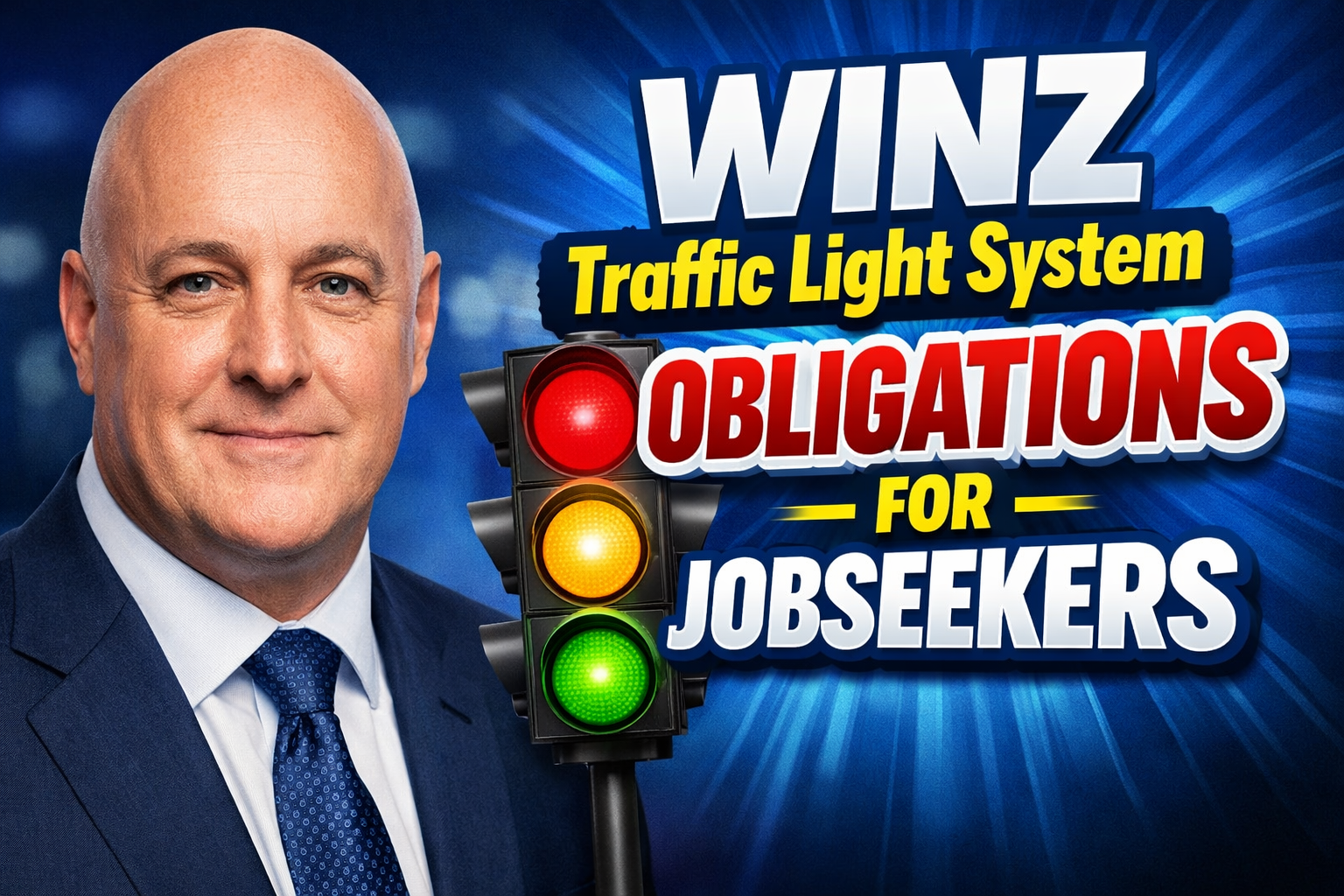
WINZ’s traffic light system is a colour‑coded way of tracking whether jobseekers on benefits are meeting their work, work‑preparation and social obligations, with clear consequences if they fall behind. Green means you are on track and get full payments, orange is a warning stage, and red can trigger sanctions such as directed job search, upskilling activities, money management, community work experience or reduced benefit.
What The Traffic Light System Is
The traffic light system was introduced from August 2024 to make benefit obligations clearer and to help the government reach its target of 50,000 fewer people on Jobseeker Support by 2030. It applies mainly to people with work‑related obligations (such as Jobseeker Support) and some with social obligations for dependent children, with expansion in 2025 to include more groups like Youth Payment and Young Parent Payment.
Work and Income uses the colours to show in MyMSD and letters how you are doing with obligations such as attending appointments, applying for jobs, and keeping children’s health and schooling up to date. The colour does not change your base entitlement by itself, but it signals when sanctions and extra activities may be imposed if you do not get back on track.
Who Is Included
The system covers clients with work or work‑preparation obligations and those with social obligations. That includes most people on Jobseeker Support, Sole Parent Support and Jobseeker Support Student Hardship, and may also include some people on Supported Living Payment, Emergency Benefit or Emergency Maintenance Allowance.
From May 2025, Youth Payment and Young Parent Payment recipients are scheduled to be brought into the traffic light system, focusing on youth activity obligations such as education or training participation. Many students using Studylink who also receive benefits with work obligations are under the same traffic light rules.
Obligations Jobseekers Must Meet
Work And Work‑Preparation Obligations
Jobseekers must actively prepare for and look for suitable work. Core obligations typically include:
- Creating and maintaining a Jobseeker Profile before benefit approval if you have work or work‑preparation obligations.
- Attending WINZ or MSD appointments, work‑focused interviews and case‑management meetings when required.
- Completing Work Ability Assessments when asked, so MSD understands what types of work and hours you can reasonably do.
- Actively looking for work, applying for suitable vacancies, and accepting suitable offers, taking into account your circumstances and health.
- Working with MSD‑approved providers to find or prepare for work, such as attending seminars, employment programmes, or short courses.
From 2025, more frequent re‑applications for Jobseeker Support (every six months) will reinforce the expectation that being on benefit is temporary for those who can work.
Social Obligations For Parents
If you have dependent children and social obligations, you must meet requirements relating to their health and education. These can include:
- Enrolling and attending scheduled health checks and immunisations for young children.
- Ensuring school‑age children are enrolled and regularly attending school or an approved education programme.
These obligations reflect the idea that supporting children’s wellbeing and development is part of responsible parenting while receiving income support.
What Green, Orange And Red Mean
Green: On Track
Green means you are meeting your obligations and there are no sanctions in place. You continue to receive your full benefit, and MSD sees you as actively engaging in your job search or social obligations.
Most jobseekers stay at green; data from the first full month of the system showed around 98.5% of jobseekers were at green with less than 2% at orange or red. Staying at green generally means answering contact from MSD, going to appointments, using MyMSD to report changes, and following your agreed job plan.
Orange: Warning Stage
Orange is a warning stage when you have not met an obligation and do not have a good reason. You might be moved to orange for missing an appointment, failing to complete a required activity, or not responding to MSD about an obligation.
Once you are at orange, you must contact MSD and get back on track within five working days. If you do this and complete any catch‑up requirements, you can move back to green without sanction; if you do not, you risk moving to red and facing consequences.
Red: Sanctions And Extra Activities
Red means you have had an “obligation failure” without good reason and did not fix it during the orange warning period. At this point MSD can apply sanctions or extra activities, which are becoming more wide‑ranging from 2025.
Historically, the first obligation failure could lead to a 50% benefit reduction, with subsequent failures increasing the sanction or stopping payments. From May and October 2025, new non‑financial sanctions and alternative activities are being added so that not everyone at red automatically has their benefit reduced.
Sanctions And New Non‑Financial Requirements
Money Management And Community Work Experience
From 26 May 2025, instead of a straight benefit cut for a first obligation failure, many clients with dependent children or a dedicated case manager may face one of two alternative sanctions. These are:
- Money Management plus an activity: for four weeks, 50% of your benefit goes onto a payment card that can only be used at approved stores for essentials like groceries, health, transport and education needs, while the other 50% continues to your bank account.
- Community Work Experience: you must find and do at least five hours of community work experience each week for four weeks.
These non‑financial sanctions aim to keep basic needs covered and keep you engaged with work‑like activity rather than simply cutting income.
Report Job Search And Upskilling
Two further sanctions take effect from 20 October 2025 for clients at red: Report Job Search and Upskilling.
- Report Job Search: you must complete and record at least three job‑search activities each week for four weeks in MyMSD, then attend an appointment and show proof. Your benefit continues at the full rate during this period, but failing to comply can lead to further consequences.
- Upskilling: you must attend and participate, to MSD’s satisfaction, in one or more employment‑related training courses or programmes for at least five hours per week over four weeks.
These sanctions are aimed at jobseekers who need stronger accountability or extra skills to get into work, and are only applied after a case‑manager appointment and assessment.
How Obligation Failures Are Counted
An “obligation failure” is any situation where you do not meet a required obligation and do not have a good reason accepted by MSD. MSD tracks obligation failures over a set reset period; policy changes will extend that period from one year to two years so that repeated failures over a longer timeframe lead to stronger sanctions.
Each new obligation failure within the reset period escalates the consequences, moving you more quickly to sanctions or stricter activities. At the same time, the traffic light system is designed to give early warning at orange and clear communication so you know what to fix before reaching red.
Practical Tips To Stay At Green
Jobseekers can usually stay at green and avoid sanctions by following some basic practices.
- Always open and read letters, texts and emails from Work and Income or Studylink quickly, and respond when asked.
- Keep your MyMSD login details handy and check your traffic light status and messages regularly.
- Tell MSD early if you cannot attend an appointment, and provide evidence (for example, medical certificates) if you have a good reason.
- Keep a simple record of job applications, interviews, and courses so you can show what you have been doing if asked or put on Report Job Search.
- Update MSD immediately if your work hours, income, living situation or care of children changes so your obligations and payments stay correct.
Why The System Matters For Jobseekers
For jobseekers, the traffic light system changes how compliance is monitored and how sanctions are applied, but it also gives clearer signals about expectations. Green status reassures you that you are on track, while orange provides a short, critical window to fix issues before any reduction or extra requirements take effect.
New non‑financial sanctions such as Money Management, Community Work Experience, Report Job Search and Upskilling focus more on behaviour change and support into work than blunt income cuts. Understanding your obligations under the traffic light system is essential to keeping full benefit payments, avoiding disruption, and making progress towards sustainable employment.

Lance Evans is a contributor at CSKHYBER.co.nz covering New Zealand and Australia news, with a focus on trending updates and public-interest stories.