
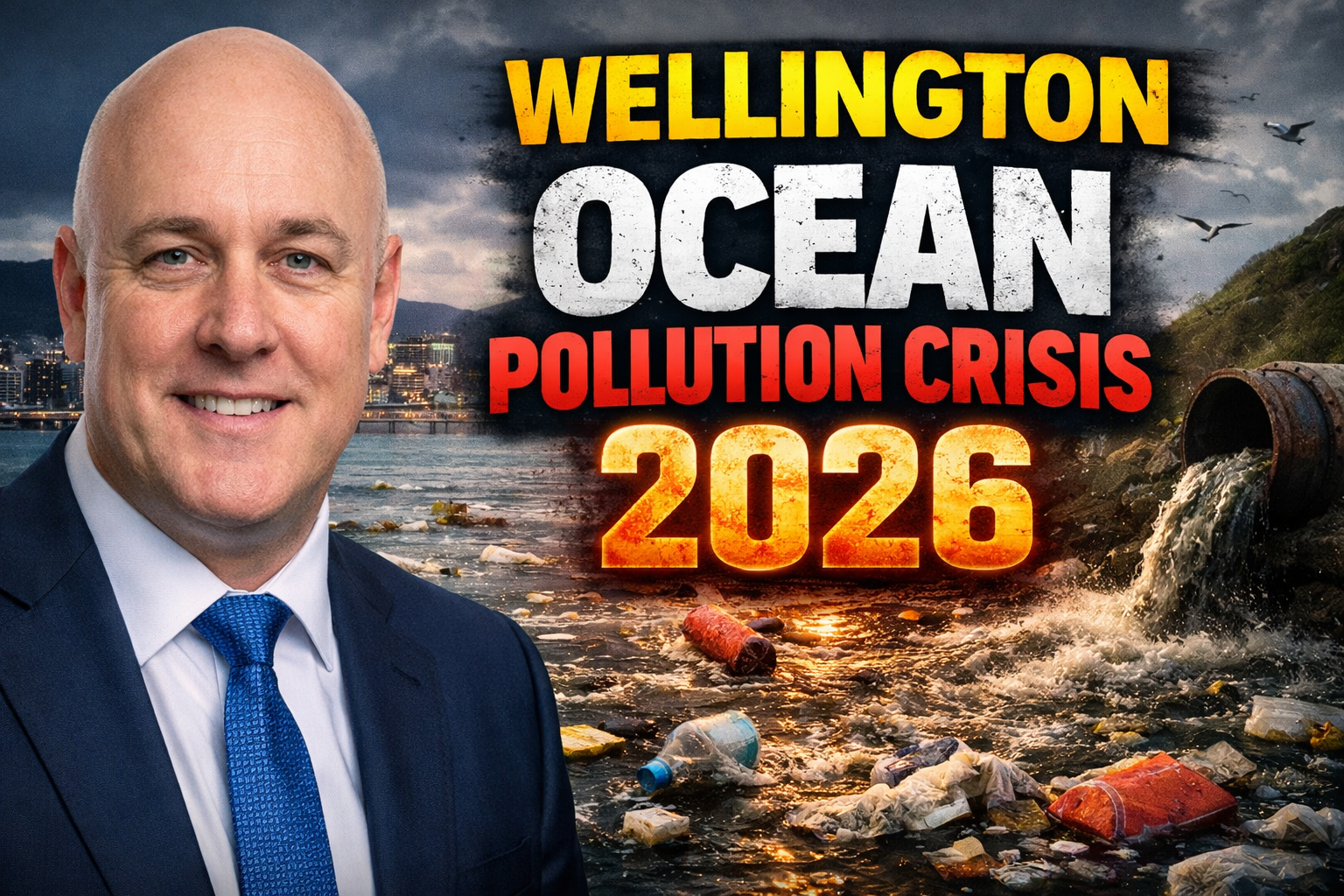
A catastrophic sewage spill at Wellington’s Moa Point Wastewater Treatment Plant has unleashed millions of liters of untreated waste into the South Coast waters, turning pristine beaches into no-go zones and sparking public outrage. Triggered by heavy rainfall and a power failure on February 4, the incident flooded the facility, forcing raw sewage through emergency short pipes directly onto the coastline. Local authorities warn of health risks, shellfish bans, and long-term ecological damage as repairs drag into months.
Crisis Origin and Initial Response
Heavy downpours overwhelmed the aging Moa Point plant, New Zealand’s capital’s primary wastewater hub serving 500,000 residents. Sewage backed up into the 1.8-kilometer outfall pipe, flooding lower levels and tripping power systems. This crippled 80 percent of equipment, including screens and pumps, diverting untreated effluent through a mere five-meter emergency pipe near Tarakena Bay.
Wellington Water estimated 70 million liters discharged in the first day alone, peaking at 3,300 liters per second during storms. Beaches from Tarakena to Lyall Bay closed immediately, with health advisories barring swimming, shellfish gathering, and dog walks. Mayor Andrew Little labeled it a total system failure, shocking a city reliant on its coastal lifestyle.
Emergency crews worked around the clock, partially restoring the long outfall by February 6 to screen debris like wipes and sanitary items. Yet peak flows still exceed capacity, mixing stormwater with human waste into Cook Strait.
Extent of Contamination
Pollutants spread rapidly via currents, contaminating a 10-kilometer stretch of South Coast. E.coli levels spiked 100 times safe limits, fecal matter visible on sands. Seagulls feasting on waste heightened bird flu fears. Offshore, a protected marine reserve faces nutrient overload, risking algal blooms.
The Department of Conservation flagged immediate threats to kelp forests and reefs between outfall points. Winds pushed plumes northward, tainting Oriental Bay sporadically. Satellite imagery revealed a brown haze extending two kilometers seaward, diluting but persisting.
Shellfish beds, vital for kaimoana, banned indefinitely; snapper and paua harvests halted. Surfers reported rashes, prompting clinic visits.
Environmental Devastation Unfolds
Raw sewage carries pathogens, heavy metals, pharmaceuticals, and microplastics, disrupting marine ecosystems. Bacteria like enterococci thrive, killing shellfish; oxygen depletion suffocates fish. Kelp forests, carbon sinks and habitats, risk die-off from excess nitrogen—already stressed by warming seas.
Long-term, bioaccumulation poisons food chains: mercury in sediments lingers decades. Coral-like bryozoans and urchins suffer, cascading to snapper populations. Experts predict biodiversity loss mirroring 1990s spills, with recovery spanning years.
Climate change exacerbates: intense rains now annual, testing infrastructure nationwide.
Contamination Impact Table
| Area Affected | Pollutants Detected | Immediate Effects | Long-Term Risks |
|---|---|---|---|
| Beaches (South Coast) | E.coli, Fecal Coliforms | Closures, Dog Illnesses | Sediment Toxins |
| Marine Reserve | Nutrients, Pathogens | Algal Blooms, Fish Kills | Habitat Loss |
| Shellfish Beds | Heavy Metals, Bacteria | Harvest Bans | Bioaccumulation |
| Open Water | Microplastics, Chemicals | Plume Spread | Food Chain Disruption |
Public Health Warnings and Community Fallout
Greater Wellington Regional Council issued red alerts: no water contact, seafood, or beach access. Illness reports surged—gastroenteritis, skin infections, eye irritations. Vulnerable groups—children, elderly, immunocompromised—urged indoor stays.
Dog owners vented fury: pets vomiting after walks, vets overwhelmed. Surfers’ associations sued Wellington Water for negligence. Social media exploded with #WellingtonSewageCrisis, photos of soiled sands going viral.
Mental toll mounts: summer ruined, families housebound. Local businesses—cafes, rentals—lost 40 percent revenue; tourism dipped.
Infrastructure Failures Exposed
Moa Point, built 1970s, handles 900 liters/second normally but crumbled under storm peaks. Chronic underfunding—$200 million shortfall over decades—delayed upgrades. Wet wipes clogged screens; power backups failed.
Wellington Water admitted overlooked warnings: 2024 audits flagged pipe capacity gaps. Governance tangles—council, central government, Veolia operator—slowed action. Mayor Little slammed convoluted chains: “Authority blurred, disaster inevitable.”
National water reforms loom: Tiaki Wai replaces Wellington Water mid-year, mandating $1 billion investments.
Government and Official Reactions
Local Government Minister Simon Watts launched a Crown inquiry into causes and prevention. “Public demands accountability,” he stated. PM Luxon called it “unacceptable,” pledging emergency funds.
Wellington Water’s Pat Dougherty expressed regret: “Underinvestment signs missed.” Veolia stayed silent amid probes. Environmental groups like Greenpeace decried ocean dumping: “Pipes between reefs? Archaic.”
Iwi leaders invoked kaitiakitanga: Ngāti Toa Rangatira demanded co-governance in fixes, citing moana desecration.
Ongoing Response and Repair Efforts
Crews pumped out flooded rooms—”Olympic pool-deep” sewage—installing temporary generators. Long outfall now handles 80 percent flow, screening solids for offshore dilution. Short pipe use minimized to peaks.
Divers cleared blockages; drones mapped plumes. Water quality tests daily, targeting safe levels by March. Full rebuild: six months, $300 million estimated.
Community clean-ups paused for safety; volunteers distribute info packs.
Economic Repercussions
Tourism hit hardest: $50 million summer loss projected. Fisheries downtime costs $10 million weekly. Cleanup, health bills tally $100 million+.
Rates hikes loom—2 percent proposed—to fund reforms. Businesses seek bailouts; insurers deny pollution claims.
Broader National Context
Wellington joins Auckland, Christchurch spills—2025 nationwide 20 incidents. Three Waters repeal left gaps; coalition reforms prioritize local control but fund shortages persist.
Climate adaptation urgent: sea-level rise threatens plants. Experts urge zero-discharge tech like advanced filtration.
Lessons and Path to Recovery
Short-term: bolster backups, wipe education campaigns. Long-term: pipe upgrades, green infrastructure absorbing storms.
Ecological monitoring: transect surveys track species. Public trust rebuild via transparency.
Residents yearn for blue-flag beaches; crisis galvanizes change. From catastrophe blooms resilience—Wellington’s coast will heal, stronger against future assaults.

Lance Evans is a contributor at CSKHYBER.co.nz covering New Zealand and Australia news, with a focus on trending updates and public-interest stories.