
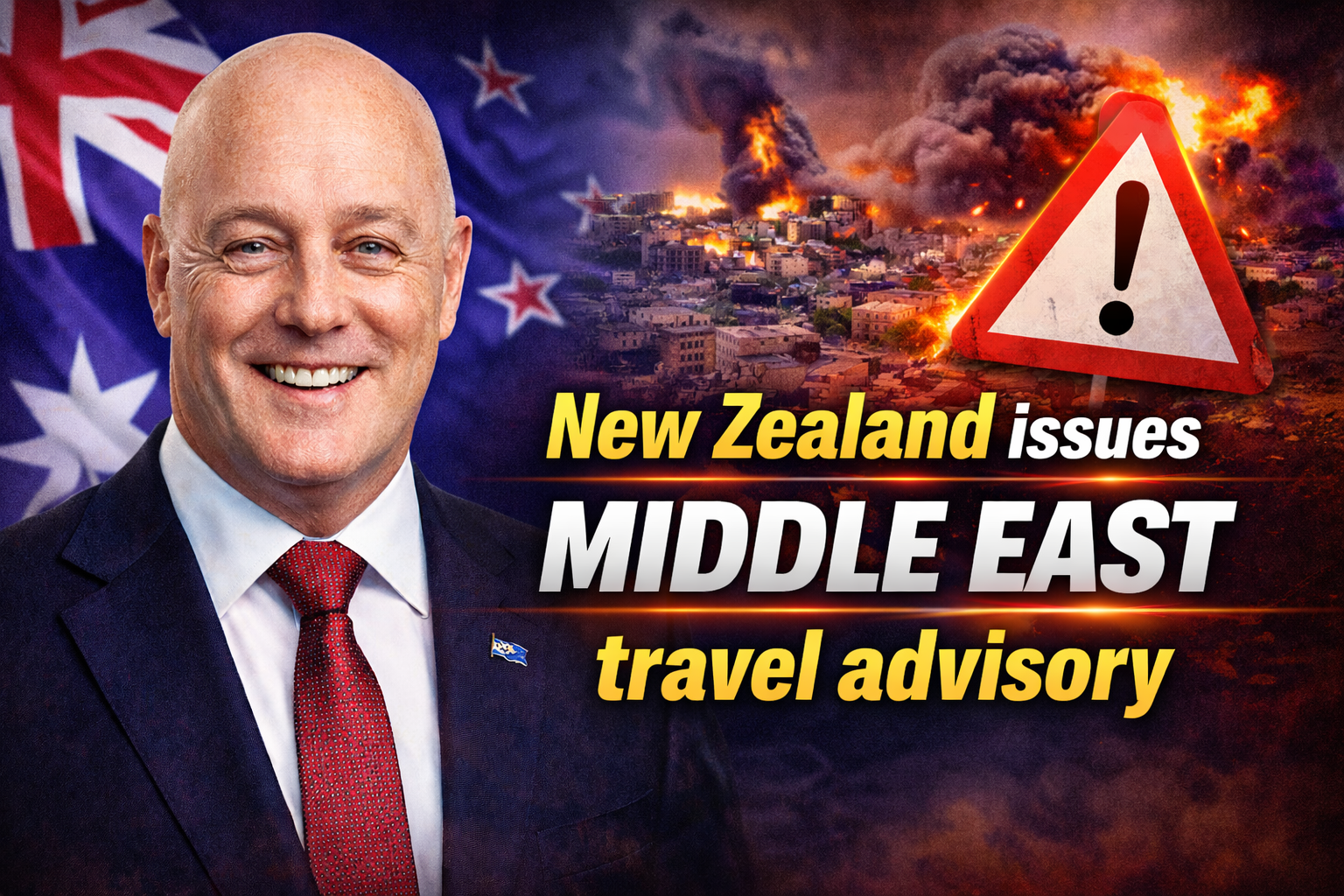
New Zealand’s Foreign Minister Winston Peters has issued a stark travel advisory urging citizens to leave high-risk Middle East conflict zones immediately. Escalating military strikes and airspace closures have created unprecedented dangers, prompting the government to elevate warnings to the highest levels across multiple countries.
Escalation of Regional Tensions
The Middle East has plunged into heightened volatility in early 2026, with military reprisals between Iran, Israel, and proxy groups sparking fears of broader war. Missile exchanges and airstrikes have targeted key infrastructure, including airports in Iran, Israel, and neighboring states. Civilian areas report casualties, while diplomatic channels falter amid rapid escalations.
New Zealand’s Ministry of Foreign Affairs and Trade (MFAT) updated its SafeTravel advisories on March 1, classifying Iran, Iraq, Lebanon, Syria, Yemen, Bahrain, Israel, Kuwait, Qatar, and the United Arab Emirates at “Do not travel” (Level 4). These zones face active hostilities, terrorism risks, and service breakdowns. Peters emphasized the urgency during a press briefing, stating Kiwis must prioritize departure when safe.
This follows patterns from past crises, where New Zealanders faced stranding during sudden airspace shutdowns. Over 3,500 flights canceled since late February underscore the chaos, stranding thousands regionally and rippling globally.
Peters’ Direct Call to Action
Foreign Minister Winston Peters delivered a no-nonsense message: “New Zealanders in affected areas—leave now if possible. Shelter in place otherwise, follow local orders, and register on SafeTravel.” He highlighted limited consular reach in Level 4 zones, where embassies operate minimally and evacuations prove unfeasible.
Peters invoked historical precedents, recalling 2003 Iraq warnings under Phil Goff, when Kiwis fled Kuwait and Jordan amid invasion fears. Current advisories mirror that scope, adding modern wrinkles like cyber disruptions and drone threats. “Commercial flights vanish overnight—don’t wait for government miracles,” he cautioned.
Kiwis hold dual loyalties in the region: around 2,500 registered travelers work in oil, aid, or diplomacy. Embassy staff in Cairo and Abu Dhabi field frantic calls, prioritizing vulnerable groups like families and journalists.
Specific Countries Under Highest Warnings
MFAT delineates risks country-by-country.
Iran tops concerns: ongoing protests turn violent, with arrests surging post-strikes. Airspace closures halt Tehran-Dubai routes; power grids falter.
Israel faces rocket barrages from Lebanon and Yemen; Tel Aviv airports shutter intermittently. Gaza and West Bank advisories ban all entry.
Lebanon and Syria host militia clashes; Beirut’s fragile peace crumbles. Yemen’s Houthi ports draw naval responses.
Gulf states like Bahrain, Kuwait, Qatar, and UAE see secondary effects—protests target Western interests, malls and hotels heighten security. Iraq’s patchwork control breeds kidnappings.
| Country | Advisory Level | Key Risks | Departure Feasibility |
|---|---|---|---|
| Iran | Do Not Travel | Strikes, protests, airspace shut | Low—land borders risky |
| Israel | Do Not Travel | Missiles, evacuations | Medium—Eilat open sporadically |
| Lebanon | Do Not Travel | Hezbollah clashes | Low—Beirut airport volatile |
| Syria | Do Not Travel | Civil war remnants | Near Zero |
| Yemen | Do Not Travel | Houthi attacks | Zero—naval blockades |
| Iraq | Do Not Travel | Militia violence | Low—Baghdad flights erratic |
| Bahrain | Do Not Travel | Protests | Medium—Gulf links |
| Kuwait | Do Not Travel | Spillover tensions | High—via Saudi |
| Qatar | Do Not Travel | Regional fallout | Medium—Doha partial ops |
| UAE | Do Not Travel | Terror alerts | High—DXB rerouting |
This table summarizes MFAT’s March 1 assessments, guiding urgent exits.
Airspace Closures and Flight Disruptions
Middle East skies form a patchwork of no-fly zones, cascading delays worldwide. Dubai’s DXB, a Kiwi hub, closed briefly February 28, canceling 200 flights. Qatar Airways and Emirates reroute via India, adding 8-12 hours.
Auckland-Doha services halt; Air New Zealand diverts Middle East-bound cargo. Over 500 Kiwis rerouted via Singapore, facing 24-hour layovers. Insurance claims spike—policies void Level 4 travel, leaving $10 million in limbo.
Regional airports like Amman and Muscat resume partially, but fuel shortages linger. Travelers cram buses to Jordan-Saudi borders, dodging checkpoints.
Impacts on New Zealanders Abroad
Approximately 1,200 Kiwis reside long-term in the Gulf for engineering and teaching gigs. Expats in Dubai pack amid rental voids; families flee Doha schools closing early.
Tourists suffer most: 800 backpackers in Israel join exodus via Jordan ferries. Aid workers in Lebanon bunker down, rationing embassy supplies. Five dual nationals detained in Iran prompt quiet diplomacy.
Business travelers cancel Gulf tours; exporters eye $200 million in stalled shipments. Universities pause exchanges—Otago and Auckland recall 50 students from Cairo peripherally.
Personal stories emerge: a Wellington nurse in Beirut texts family, “Sirens constant—staying put.” A Hamilton engineer buses from Kuwait, praising SafeTravel pings.
Government Response and Consular Support
MFAT activates crisis protocols: 24/7 hotlines field 5,000 calls daily. Wellington’s Global Operations Centre coordinates with Five Eyes allies, pooling embassy resources.
New Zealand lacks posts in most hot zones—British and Australian missions step up. Cairo Embassy bulks staff 50%; virtual town halls brief citizens.
Funding surges: $2 million for repatriation flights if viable. Peters greenlights emergency passports for 200 lost documents.
Past ops inform: 2020 Beirut evacuations airlifted 150 Kiwis. Current scale dwarfs that—contingencies include charter jets from Oman.
Historical Context of NZ Travel Advisories
New Zealand’s cautious stance traces to 1970s hijackings and 2003 Iraq. MFAT’s four-tier system—Exercise Normal, Increased Caution, Avoid Non-Essential, Do Not Travel—evolved post-9/11.
Middle East advisories peaked during Arab Spring (2011) and Yemen civil war (2015). 2026 marks broadest Level 4 cluster since 2003, driven by multi-front flares.
Stats show compliance saves lives: 95% of advised Kiwis exit pre-peak crises. Non-compliance risks detention or injury—10 cases yearly.
Practical Advice for Kiwis in the Region
MFAT outlines survival steps:
- Register on SafeTravel immediately—enables welfare checks.
- Shelter in place: stock 72 hours’ food, water, meds; secure doors.
- Monitor local news, apps like Alertify.
- Avoid crowds, western hotspots; vary routines.
- Carry cash, spare phone, NZ passport copies.
- Use VPNs for comms; power banks essential.
Departure tips: book flexible tickets via Oman or Jordan; buses beat flights now. Families prioritize kids—Egyptian routes safest.
Insurance voids high-risk zones—check AXA or Southern Cross now.
Broader Implications for Travel and Trade
Kiwis rethink holidays: Turkey and Egypt drop to Level 3, but bookings plummet 40%. Cruise lines skip Red Sea ports.
Trade hurts: dairy shipments reroute around Hormuz; oil prices jump 15%, hiking petrol 20 cents/liter.
Universities suspend research; film crews abort Jordan shoots. Tourism operators pivot to Pacific.
Public sentiment splits: polls show 70% back warnings, 20% decry alarmism. Protests fizzle—focus on safe returns.
Economic and Diaspora Ripples Back Home
Remittances dip $5 million monthly from Gulf workers. Auckland’s Pasifika communities pray for Fijian kin in Qatar.
Air NZ shares wobble 3%; exporters lobby for aid. Government pledges $50 million business relief if prolonged.
Diaspora networks activate: Iranian Kiwis fundraise for Tehran relatives; Jewish communities bolster embassy ties.
International Coordination and Allies
New Zealand aligns with Australia, UK, Canada—joint advisories amplify reach. UN briefings shape responses; Peters meets Luxon for strategy.
Five Eyes intel-sharing spots threats early. Commonwealth links aid evacuations via Cyprus.
Global carriers coordinate: Emirates hubs reroute 100 NZ flights.
Looking Ahead: When Safe to Return?
Advisories lift incrementally—Gulf states may downgrade first if de-escalation holds. Iran, Syria linger longest.
MFAT promises weekly reviews; SafeTravel app pushes updates. Post-crisis, mental health support rolls out for returnees.
Peters vows transparency: “We’ll get you home—stay smart.”
Why This Matters for Everyday Kiwis
Travel advisories safeguard lives, curbing $100 million in potential rescue costs. They signal global interconnectedness—Middle East flares hit Kiwi wallets via fuel, flights.
Peters’ blunt talk resonates: New Zealand punches above weight diplomatically, prioritizing citizens. Families sleep easier knowing government’s watching.

Lance Evans is a contributor at CSKHYBER.co.nz covering New Zealand and Australia news, with a focus on trending updates and public-interest stories.