

National Science Week stands as Australia’s largest annual celebration of science, running nine days each August since 1997. It draws over three million participants through more than two thousand registered events, from urban labs to remote outback workshops. Coordinated by the Australian Government with state committees, CSIRO, ABC, and the Australian Science Teachers Association, the festival spans astrophysics to ecology.
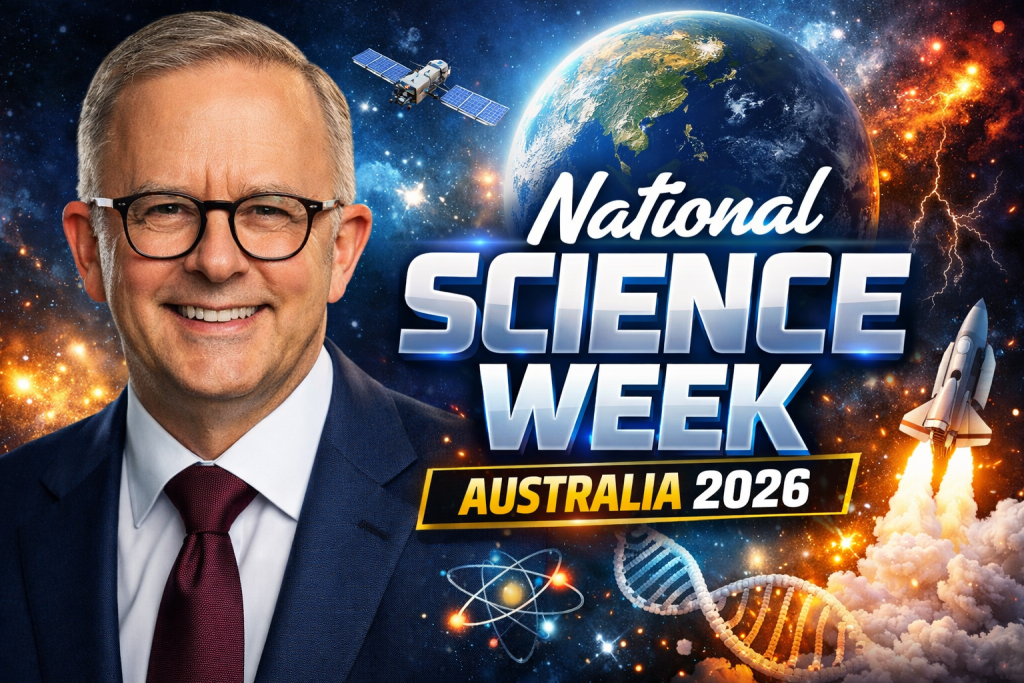
Past themes like 2025’s “Decoding the Universe” explored quantum science and mathematics, aligning with global events such as the International Year of Quantum Science. The grassroots model empowers locals to host talks, experiments, and festivals, fostering public literacy amid challenges like climate change and technological disruption. Over one million attend public events yearly, with schools adding hundreds of thousands more.
Seeds of Science Theme Explored
The 2026 schools theme, “Seeds of Science: Nurturing Knowledge for All,” invites students to trace ideas from initial curiosity to communal sharing. Analogous to plant growth, it highlights inquiry sparking questions, experimentation building evidence, and collaboration spreading insights. Classrooms simulate seed germination through biology labs, while physics demos model knowledge “roots” via network diagrams.
Activities encourage exploring how discoveries benefit society, from agricultural biotech to medical breakthroughs. Teachers link to Australian curricula, integrating cross-disciplinary projects like coding plant growth simulations or debating ethical knowledge-sharing. The theme promotes inclusivity, ensuring rural, indigenous, and diverse learners access resources. A free teacher resource book launches in late March, packed with experiments, diagrams, and websites.
| Theme Element | Classroom Application | Learning Outcomes |
|---|---|---|
| Seed of Curiosity | Question-generating games | Critical thinking skills |
| Growth Through Inquiry | Hands-on experiments | Evidence-based reasoning |
| Nurturing Roots | Group research projects | Collaboration competencies |
| Sharing Harvest | Science fairs, presentations | Communication proficiency |
This framework transforms abstract science into relatable, growth-oriented narratives.
New Funding Initiatives
The Australian Government unveils substantial new funding for 2026, including grants up to five hundred dollars per school for themed activities—applications open March. National Science Week Grants support over one hundred projects, prioritizing underserved regions and innovative tech integration. A multimillion-dollar Science and Technology Funding Package targets education infrastructure, quantum research hubs, and AI ethics programs.
Allocations boost CSIRO’s regional outreach, funding mobile labs for remote schools. University partnerships receive endowments for teacher training in emerging fields like synthetic biology. Indigenous STEM initiatives gain dedicated streams, incorporating traditional knowledge systems. Private sector matches amplify impact, with tech firms sponsoring VR experiences.
| Funding Stream | Amount | Focus Areas |
|---|---|---|
| School Grants | Up to $500/school | Themed events, materials |
| National Grants | Millions total | Community festivals, outreach |
| Tech Package | Multimillion | Quantum, AI, biotech labs |
| Indigenous STEM | Targeted | Cultural integration projects |
These investments seed long-term STEM pipelines.
School Participation Strategies
Schools apply for grants via ASTA portals, hosting everything from seed-planting hypothesis tests to citizen science data collection. Virtual events enable remote joining, with live streams from Sydney’s Powerhouse Museum or Perth’s WA Museum. Resource books provide ready-to-use modules: dissect seed structures, model pollination via robotics, or analyze soil microbiomes.
Inter-school collaborations form “knowledge networks,” mirroring theme roots. Early childhood centres adapt with sensory gardens, while high schools tackle advanced topics like gene editing ethics. Evaluation tools track engagement, feeding into national reports.
Regional Event Highlights
New South Wales features Sydney’s Questacon pop-ups and coastal ecology tours. Victoria’s Melbourne Museum hosts biofabrication workshops, partnering with Monash University. Queensland’s Brisbane River labs explore climate-resilient crops, with Great Barrier Reef virtual dives.
Western Australia’s Boolbardip Museum unveils collections-linked programs, from meteorites to marsupial genomics. South Australia’s Adelaide Festival Centre stages laser shows decoding light spectra. Tasmania’s Hobart Antarctic exhibits nurture polar science interest. Northern Territory’s Darwin indigenous astronomy nights blend cultures. ACT’s Canberra National Arboretum plants literal science seeds.
| State/Territory | Signature Event | Unique Twist |
|---|---|---|
| NSW | Powerhouse workshops | Urban biodiversity focus |
| VIC | Museum bio-labs | Synthetic biology demos |
| QLD | Reef science dives | Climate adaptation studies |
| WA | Meteorite collections | Space-earth connections |
Diversity ensures nationwide resonance.
STEM Career and Workforce Impact
National Science Week inspires career pathways, with role models from CSIRO scientists to startup founders sharing journeys. Theme-aligned career fairs connect students to apprenticeships in renewables and health tech. Longitudinal studies show participants pursue STEM at higher rates, addressing shortages in engineering and data science.
Workforce programs upskill teachers via free PD webinars, embedding inquiry pedagogies. Industry panels discuss quantum jobs and biotech frontiers, preparing youth for innovation economies.
Teacher Resources and Grants
ASTA’s resource book offers curriculum-mapped activities: probability “growth” models, ecology food webs, chemistry nutrient cycles. Online hubs provide templates, videos, and assessment rubrics. Grants cover guest speakers, kits, or field trips—priority to low-SES schools.
Virtual reality modules simulate seed dispersal globally, while maker spaces build pollinator habitats. Community tie-ins invite parents to evening demos, strengthening home-school links.
Future Vision and Legacy
As the 30th edition, 2026 cements National Science Week’s role in building a scientifically literate society. The theme’s nurturing metaphor extends to policy, advocating sustained R&D funding amid global competition. Evaluations promise data-driven evolution, targeting equity gaps.

Lance Evans is a contributor at CSKHYBER.co.nz covering New Zealand and Australia news, with a focus on trending updates and public-interest stories.