
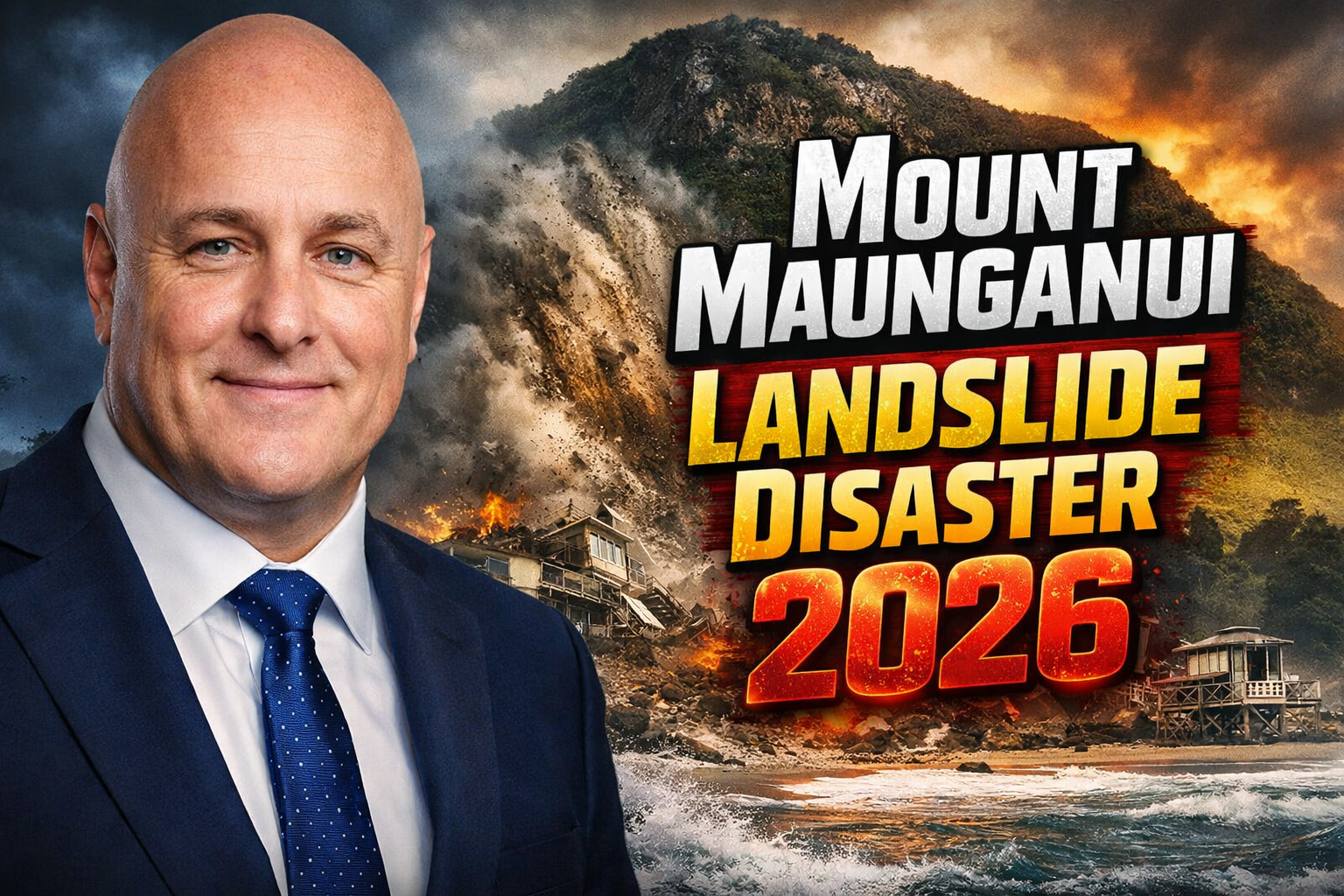
A devastating landslide struck the Beachside Holiday Park at the base of Mauao (Mount Maunganui) on Thursday morning, January 22, 2026, burying tents, campervans, and facilities under tons of debris. Emergency services launched frantic searches for several missing individuals, including children, after screams echoed from the rubble amid New Zealand’s North Island’s worst flooding in years. The incident unfolded during record-breaking rainfall, amplifying fears of further slips as rescuers paused operations for safety.
Incident Timeline
The landslide hit around 9:30 AM local time in the southeastern corner of the popular holiday park, a stone’s throw from the beach and the sacred Mauao summit. Witnesses described violent shaking before a wall of mud, rocks, and trees cascaded down, demolishing a toilet and shower block, crushing vehicles, and engulfing campsites. Initial cries for help pierced the chaos, but silence fell shortly after, heightening urgency.
Fire and Emergency New Zealand deployed 40 firefighters, including urban search and rescue specialists and sniffer dogs, within minutes. St John Ambulance declared a major incident, transforming the nearby Mount Maunganui Surf Life Saving Club into a triage and evacuation hub. Most campers evacuated swiftly, but several remained unaccounted for, prompting an all-out hunt.
Location and Vulnerable Terrain
Mount Maunganui, on the Bay of Plenty coast southeast of Auckland, draws thousands to its holiday parks for summer escapes. The Beachside Holiday Park sits at Mauao’s base—an extinct volcano revered by Māori as a wahi tapu (sacred site). Steep slopes above the park, scarred by prior erosion, turned lethal when saturated by 300 millimeters of rain in 48 hours.
The region logged its wettest day on record, part of a tropical low-pressure system’s onslaught. Red weather warnings flagged “threat to life” risks, with slips inevitable on unstable clay soils. Past events, like 2012 closures, underscored vulnerabilities, yet holiday peaks left sites packed.
Victims and Human Impact
Among the missing is at least one young girl, with reports suggesting other children and families unaccounted for. Distraught parents gathered at the surf club, clutching photos and awaiting news. Tauranga City Council confirmed multiple people trapped initially, though exact numbers fluctuate as roll calls continue.
One person suffered serious injuries from related debris, treated on-site. No confirmed fatalities by midday January 22, but Minister for Emergency Management Mark Mitchell warned of a grim outlook. “Young people” feature prominently, he noted, as teams sift rubble laced with hazards.
Rescue Operations Underway
Firefighters combed the site with thermal imaging, probes, and canines, navigating precarious ground. Operations halted briefly due to secondary slip risks, resuming under geotech oversight. Police cordoned the area, urging public stay-away to preserve access.
St John and helicopters stood ready for airlifts. Bay of Plenty MP Tom Rutherford called for national support, praising first responders. Witnesses aided early extractions, pulling campers from mud before pros arrived.
| Rescue Resource Deployed | Quantity | Role |
|---|---|---|
| Firefighters/USAR Teams | 40 | Debris clearance, searches |
| Sniffer Dogs | Multiple | Victim detection |
| Ambulance Crews | Dozens | Medical triage |
| Police Officers | 50+ | Security, coordination |
| Helicopters | On standby | Potential extractions |
Weather Trigger and Broader Context
This disaster crowns a week of turmoil from a slow-moving low, dumping 250-350 millimeters across Northland to Gisborne. North Island states of emergency in Thames-Coromandel, Northland, Western Bay of Plenty, and Tauranga activated January 21. Rivers like Mahurangi overflowed elsewhere, sweeping vehicles and isolating towns.
Mount Maunganui’s slip ties into four regional emergencies declared amid “red” alerts. MetService linked intensified lows to warming oceans, echoing 2023’s Cyclone Gabrielle devastation.
Government and Local Response
Tauranga City Council liaised on-site, supporting staff and evacuees. Prime Minister Christopher Luxon monitored from Wellington, pledging resources. Minister Mitchell visited affected zones, stressing unity.
Local iwi Ngāi Te Rangi offered cultural guidance, honoring Mauao’s mana. Holiday park management assisted roll calls, confirming most visitors safe.
Community Heartbreak and Support
Campers recounted terror: families in tents vanished under mudslides, campervans flattened. Social media captured shaking earth and fleeing crowds. Surf club volunteers fed and sheltered hundreds, with locals donating clothes and kai.
Distressed relatives faced agonizing waits, RNZ reporting couples missing children. National prayers poured in, #MountMaunganuiSlip trending globally.
Historical Precedents in the Area
Mauao’s flanks have slipped before—2012 forced a year-long park closure after heavy rains. 2004’s Pasifika storm battered nearby Coromandel similarly. 2023’s Gabrielle dumped 500 millimeters region-wide, killing four and costing billions.
Patterns reveal climate escalation: three major North Island events in three years. Parks atop slip-prone zones prompt safety debates.
| Past Mount Maunganui Events | Date | Rainfall (mm) | Impacts |
|---|---|---|---|
| Current Landslide | Jan 2026 | 300+ | Missing persons, evacuations |
| Major Slip Closure | 2012 | 250 | Park shut 1 year |
| Gabrielle Aftermath | 2023 | 500 | Regional billions loss |
| Pasifika Storm | 2004 | 300-450 | Widespread slips |
Infrastructure and Economic Fallout
The park shut indefinitely, stranding tourists and hammering summer revenue. Nearby roads like SH2 faced closures from related slips. Cleanup demands heavy machinery, with debris blocking beach access.
Bay of Plenty’s tourism, worth millions weekly, grinds amid floods. Insurers brace for claims, recalling Gabrielle’s billions.
| Economic Hit Estimate | Sector | Projected Loss (NZD) |
|---|---|---|
| Holiday Park Operations | Tourism | 5-10 million |
| Regional Cleanup | Infrastructure | 20-30 million |
| Lost Visitor Spending | Hospitality | 10-15 million |
| Agriculture (nearby) | Farming | 5 million |
Environmental Ramifications
Slips scarred Mauao’s slopes, spewing sediment into harbors and fouling waters. Debris risks marine life, with cleanup challenging beaches. Erosion accelerates on deforested hills, demanding revegetation.
Conservationists push native planting buffers, critiquing urban sprawl near volcanoes.
Challenges Facing Rescuers
Ongoing rain and slip threats complicate digs—teams work in PPE amid unstable piles. Nightfall looms, testing equipment. Psychological toll hits first responders, with counselors on hand.
Public appeals seek dashcam footage or witness tips, streamlining efforts.
Path to Recovery
As searches persist, councils eye geotech probes for reopening. Welfare centers expand, Mayoral Funds activate aid. Long-term, resilient designs like retaining walls proposed.
Communities rally, embodying Kiwi spirit—neighbors clearing paths, iwi leading karakia.
Broader Lessons for New Zealand
This tragedy spotlights summer holiday risks in flood zones. Calls intensify for park relocations, advanced warnings, and climate-resilient planning. National Resilience Plan funding accelerates post-event.

Lance Evans is a contributor at CSKHYBER.co.nz covering New Zealand and Australia news, with a focus on trending updates and public-interest stories.