
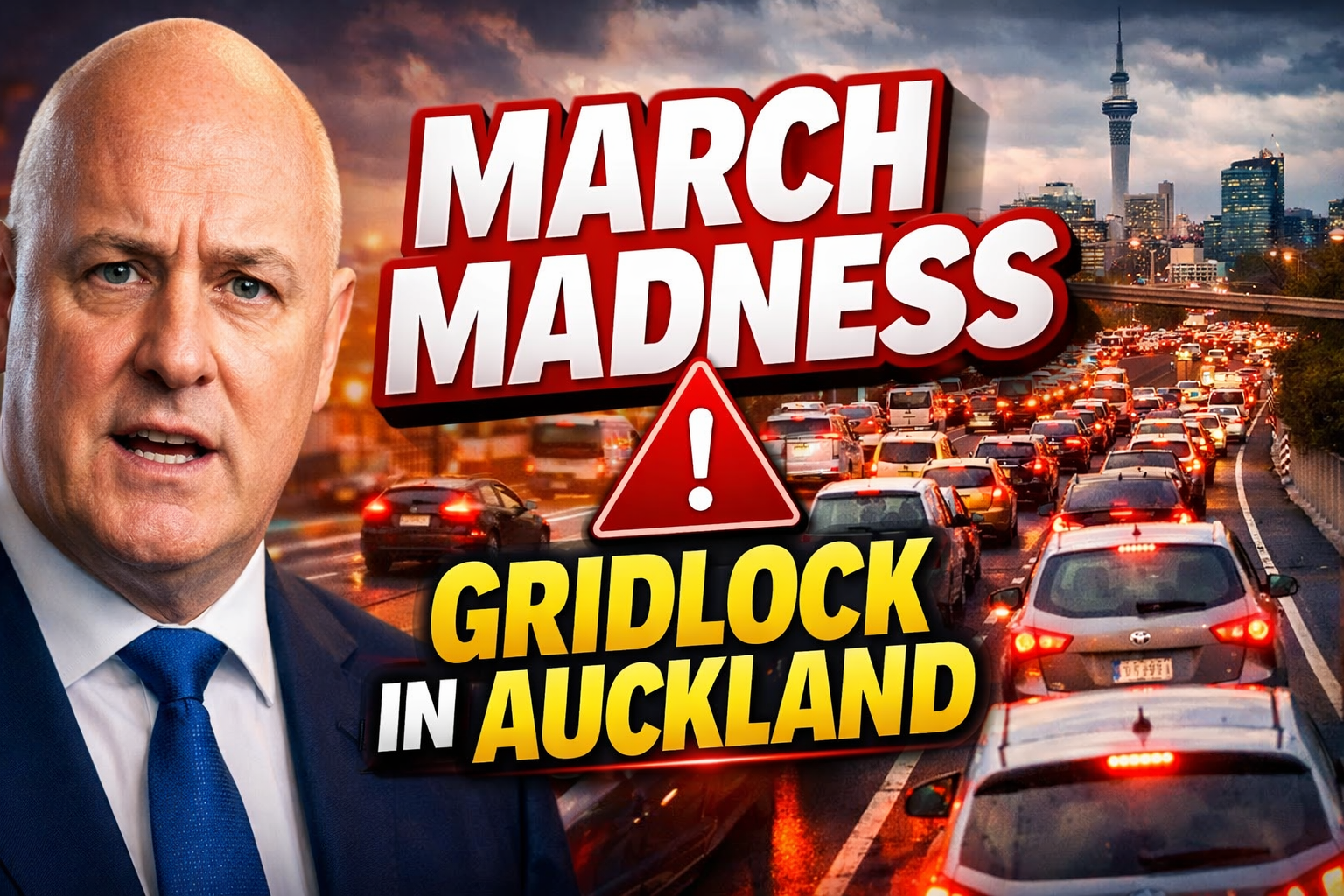
Auckland’s roads and rails are choking under the strain of peak-season demand, leaving commuters trapped in endless delays. As March brings back students, workers, and holiday returnees, the city’s transport woes have hit fever pitch, turning routine trips into exhausting ordeals.
Introduction
Every March, Auckland transforms into a commuter’s nightmare. The post-summer rush collides with school starts, university reopenings, and full office returns, swelling roads and public transport to breaking point. Traffic crawls at peak hours, buses crawl behind cars, and trains face shutdowns for upgrades—creating a perfect storm of gridlock.
This annual “March Madness” isn’t just frustrating; it’s reshaping daily life. Average drives that should take minutes stretch into hours, while public options falter under overload. Commuters lose precious time, money, and patience, highlighting deep flaws in a system struggling to keep pace with a booming population.
The Scale of the Congestion Crisis
Auckland’s traffic peaks brutally in March mornings and evenings. Rush hour sees vehicles averaging over nineteen minutes to cover just ten kilometres around eight in the morning, doubling to twenty minutes by five in the afternoon. This surge lasts longer in the evenings, fueled by school pickups and staggered work finishes.
The city ranks among the world’s most clogged urban areas. Drivers lose dozens of hours yearly to delays, with congestion claiming nearly a third of rush-hour travel time. Economic fallout runs into billions annually, from wasted fuel to stalled productivity, as harbours and volcanoes funnel everyone onto fewer routes.
Population growth amplifies the mess. The metro area swells steadily, pushing more cars onto roads designed for fewer people. Car ownership has surged, with light vehicles per person climbing steadily, while vehicle kilometres travelled balloon, overwhelming motorways like the Northwestern and Southern.
Public Transport Under Pressure
Public transport promises relief but delivers disappointment this March. Buses, trains, and ferries handle over two million passenger journeys weekly during peak season, with thirteen thousand five hundred trips daily—including five hundred school runs. Yet ridership hovers below pre-pandemic highs, stuck around eighty-eight million trips yearly due to disruptions and fare hikes.
Trains are the biggest casualty. Ongoing City Rail Link preparations trigger full network closures, like those post-holidays and partial shutdowns on Southern and Eastern lines through mid-March. Replacement buses overflow, unable to match train capacity, stranding thousands.
Buses fare little better, bogged in the same traffic snarl. Fare increases averaging over five percent earlier this year—highest on short trips—deter riders, while off-peak discounts vanish. Ferries see sharp hikes too, yet reliability dips as demand spikes Wednesdays, the busiest weekday.
Key Causes Behind the Gridlock
Multiple factors converge in March to strangle movement. Returning holiday traffic layers onto commuter flows, with motorways closing overnight from nine at night to five in the morning for maintenance—work delayed by weather spills into days.
Construction and upgrades exacerbate chaos. City Rail Link trials shut lines entirely some days, while roadworks on major arterials like State Highway One add detours. Bad weather earlier this year postponed fixes, piling pressure on early 2026 schedules.
Economic and lifestyle shifts play in. Work-from-home lingers post-pandemic, but not enough to dent peaks; instead, it flattens overall ridership while surges overwhelm. Low-density sprawl means longer trips from suburbs like Manukau to the city centre, with cars dominating—over eighty percent of work commutes.
Here’s a snapshot of peak impacts:
| Time Period | Avg Time per 10km | Main Causes | Affected Modes |
|---|---|---|---|
| Morning Peak (7-9am) | 19 minutes | School/university starts, work rush | Roads, buses, some trains |
| Afternoon Peak (3-6pm) | 20 minutes | School pickups, staggered quits | All roads, buses heaviest |
| Interpeak | 12-14 minutes | Shopping, errands | Buses, ferries strained |
| Overnight | Minimal | Maintenance closures | Trains fully shut, motorway works |
Commuter Stories from the Frontlines
Real lives grind to a halt amid the madness. Sarah, a teacher from South Auckland, leaves home at six for a twenty-kilometre trip to her school—now fifty minutes of bumper-to-bumper frustration. “I miss breakfast with my kids daily,” she shares, echoing thousands facing similar squeezes.
Freight drivers suffer too. Trucking firms lose capacity, crosstown deliveries halving over years as delays mount. One operator notes thirty percent volume drops since mid-decade, forcing surcharges or skipped zones.
Public transport users vent frustration. A Manukau station regular gripes about fare pinches: “Even small hikes add up amid rising costs.” Replacement buses during rail closures pack sardine-tight, turning thirty-minute trains into ninety-minute slogs.
Parents juggle worst. Nearly thirty thousand daily school trips hit congestion, with passengers in cars—over forty percent—stuck longest. Low-income suburbs like Mangere see half a million congested origins daily, blocking job and education access.
Economic and Environmental Toll
The gridlock bills Auckland dearly. Time lost in traffic alone nears massive figures yearly, with macro hits from reduced investment and spending pushing totals higher. Freight delays cost trucking millions extra, rippling to supply chains and consumer prices.
Businesses bleed. Tradespeople idle in jams cut daily sites visited; retail sees footfall dip as access worsens. Hospitality notes parking woes sway customers, while surveys peg congestion as top growth barrier for a third of firms.
Environmentally, stop-start traffic guzzles fuel, spiking emissions. Household travel spews over a third of city greenhouse gases, worsened by idling. Air pollution links to thousands of health issues yearly, from respiratory woes to premature ends—mostly vehicle-sourced.
Vehicle ops add pain: extra wear, fuel, and maintenance near triple-digit millions annually.
Government and Authority Responses
Auckland Transport urges planning ahead, promoting apps for real-time updates. They anticipate six-point-seven percent congestion rises this busy stretch, pushing off-peak travel and cycling.
Mayor pushes congestion charging—time-of-use fees to curb peaks. Reports back this, projecting relief via demand management on motorways.
Longer fixes loom. City Rail Link opens late this year, doubling thirty-minute city access for residents. Northwest Busway progresses, with express routes like WX1 hitting milestones fast. New stations at Drury and Paerata boost south lines.
Yet riders doubt quick wins. Rail rebuild eroded trust over five disruption years; full summer shutdowns risk “one-and-done” users post-launch.
Looking Ahead: Pathways to Relief
March Madness tests Auckland’s limits, but hope glimmers. CRL could reshape rails, slashing some road loads. Busways and frequent routes—like upcoming Albert Street returns—promise steadier options.
Commuters need mode shifts now: carpooling, e-bikes, or flexible hours. Authorities eye integrated fares, more bus lanes, and enforcement against peak excesses.
Ultimately, smarter growth—denser hubs, better links—holds keys. Without it, next March repeats the snarl, costing more time, cash, and calm.

Lance Evans is a contributor at CSKHYBER.co.nz covering New Zealand and Australia news, with a focus on trending updates and public-interest stories.