
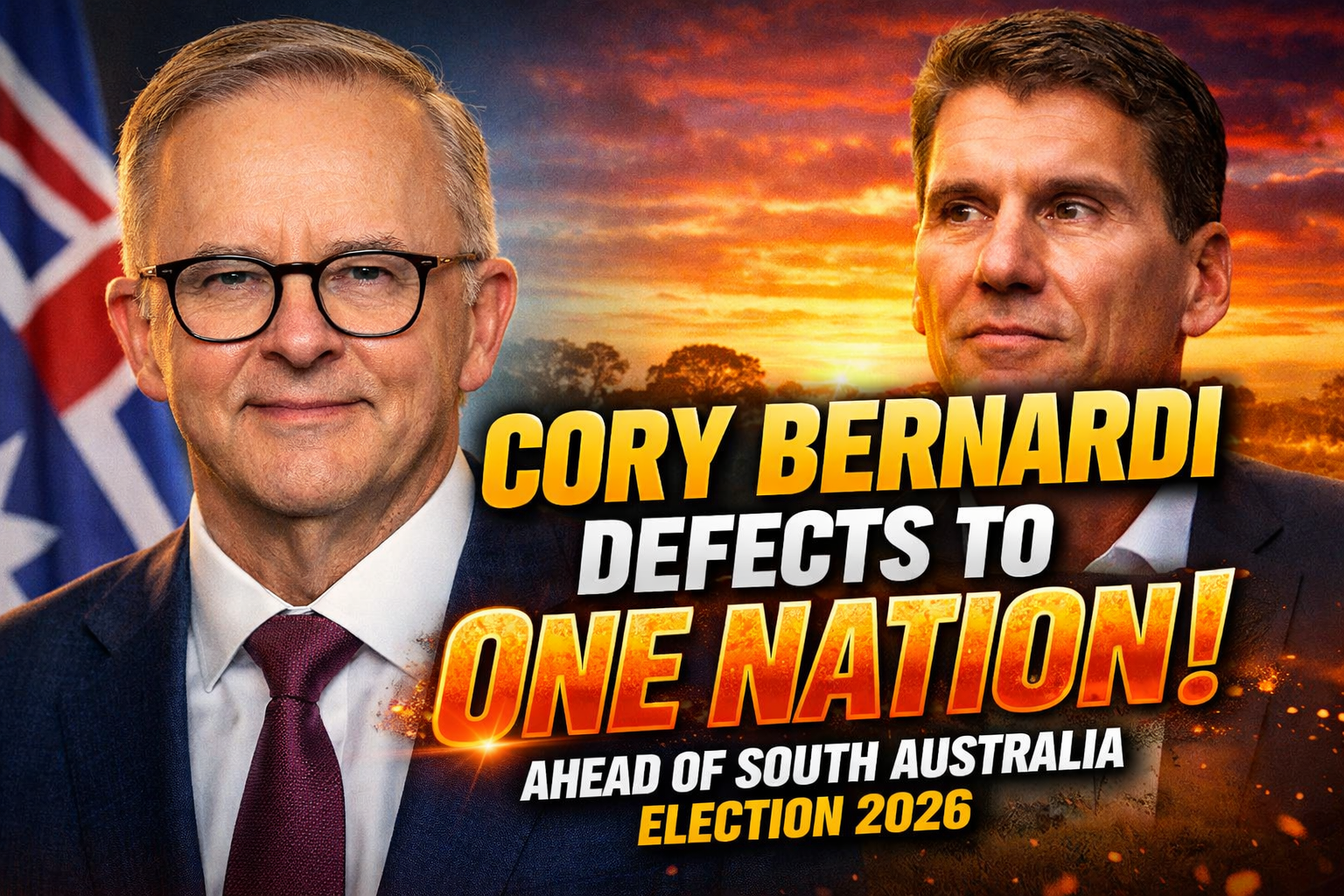
Cory Bernardi, a prominent conservative figure in Australian politics, has defected to Pauline Hanson’s One Nation party to lead its Legislative Council ticket ahead of the South Australia state election on March 21, 2026. This move marks a significant shift in the state’s political landscape, amplifying One Nation’s challenge to the dominant Labor-Liberal duopoly.

Bernardi’s Political Background
Cory Bernardi served as a Liberal senator for South Australia from 2006 until 2017, when he dramatically resigned to form the Australian Conservatives amid ideological clashes with the Liberal Party. His new party struggled, dissolving after receiving less than 1% of the Senate vote in the 2019 federal election.
Bernardi’s career has been defined by staunch social conservatism, opposition to multiculturalism, climate policies, and progressive social reforms, often drawing controversy for outspoken views on issues like same-sex marriage and immigration. After leaving parliament in 2020, he hosted shows on Sky News Australia, maintaining a public profile critical of the major parties.
This defection follows a pattern: he’s the second ex-Coalition figure in months to join One Nation, after Barnaby Joyce, as Hanson recruits disaffected conservatives amid poor Coalition polling.
Announcement and Rationale
One Nation leader Pauline Hanson announced Bernardi’s leadership role on February 2, 2026, via press release and a joint appearance in Adelaide. She praised his “clear vision for South Australia” and alignment with party values, positioning him to spearhead the upper house campaign.
Bernardi criticized South Australia’s “uni-party” system—where Labor and Liberals allegedly prioritize self-preservation over constituents—claiming it fuels economic decline, rising costs, state debt, and excessive regulation (“red, green, black, and blue tape”). He vowed One Nation would provide the “most potent voice of opposition,” regardless of seats won.
Hanson warned Labor: “You’re on notice—we’re coming for your seats,” and confirmed candidates for all lower house seats, though One Nation holds no current SA parliamentary seats after MP Sarah Game’s 2025 departure.
Electoral Context
South Australia’s March 21 election features a proportional upper house system where parties need over 8% of votes (first preferences or via preferences) for a Legislative Council seat—achievable for One Nation given national trends. Polling from RedBridge shows One Nation at 26%, surpassing conservatives nationally and reflecting Coalition declines.
The state faces voter fatigue with Labor’s long incumbency under Premier Peter Malinauskas and Liberals’ perceived weakness. Issues like cost-of-living pressures, housing, energy costs, and debt resonate with One Nation’s populist platform targeting regional and working-class voters.
One Nation aims to contest every seat, potentially disrupting preferences and forcing coalitions, with Hanson hinting at Nationals alliances as a path to influence or power.
Reactions from Rivals
Liberals downplayed the impact, with no comment on speculated defector Alex Antic. SA Greens leader Robert Simms mocked Bernardi as establishment “baggage,” comparing his party-hopping to the Kardashians and doubting disruption potential.
Labor faces direct pressure, as Hanson eyes marginal seats. Analysts like Kos Samaras note One Nation’s rise signals broader national shifts away from major parties, driven by dissatisfaction with governance on key issues.
Media coverage, from ABC to Sky News, frames this as One Nation’s boldest SA push yet, with Bernardi’s local prominence boosting credibility.
Policy Priorities
Bernardi outlined a platform slashing bureaucracy, easing living costs, and auditing debt to prioritize South Australians “left behind.” Core One Nation themes—anti-woke, pro-energy security, immigration controls—align with his history, appealing to outer-suburban and rural bases alienated by Liberal moderation.
The party leverages Bernardi’s media savvy for visibility, echoing Hanson’s national strategy of targeting all government levels amid 2026 federal buzz.
Broader Implications
This defection underscores One Nation’s momentum as Australia’s top conservative force per polls, challenging the two-party dominance and foreshadowing volatile 2026 dynamics. Success could yield Bernardi a platform to revive his influence, fragment right-wing votes, or even broker post-election deals.
For South Australia, it heightens competition, forcing majors to sharpen pitches on economy and culture. Voters disillusioned with the status quo may reward this outsider bid, reshaping parliament. Yet Bernardi’s polarizing past risks alienating moderates, testing One Nation’s ceiling.

Lance Evans is a contributor at CSKHYBER.co.nz covering New Zealand and Australia news, with a focus on trending updates and public-interest stories.