
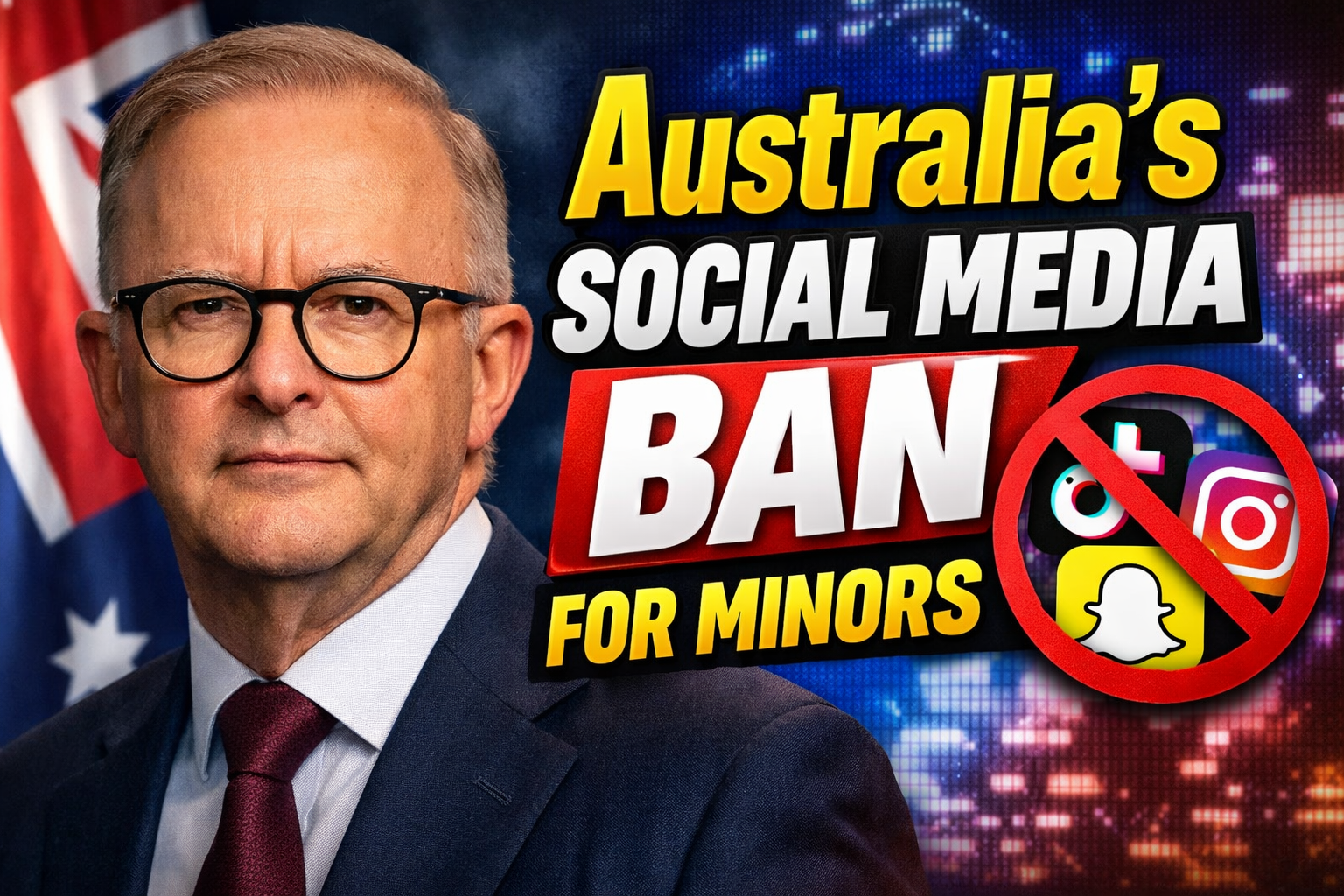
In a world where kids grasp smartphones before crayons, Australia shattered norms by enacting the first national social media ban for under-sixteens. Passed via amendments to the Online Safety Act, the law took effect on December tenth, 2025, mandating platforms to block account creation and ax existing ones for minors. No fines for kids or parents—just massive penalties up to forty-nine point five million Australian dollars for companies failing to comply. This pioneering step addresses screen addiction, cyberbullying, and harmful content, backed by seventy-nine percent of adults in surveys. Yet as platforms scramble, teens adapt swiftly, exposing enforcement gaps in this high-stakes digital tug-of-war.
Background and Rationale
The ban stems from mounting evidence of social media’s toll on youth. Studies link excessive use to anxiety, depression, and sleep disruption, with algorithms pushing addictive loops. Australian lawmakers, spurred by parental outcry and teen mental health crises, drew lines at sixteen—no parental consent loopholes allowed. Platforms like Facebook, Instagram, TikTok, Snapchat, X, YouTube, Reddit, Twitch, Kick, and Threads fall under scrutiny, chosen for their social interaction focus. Exclusions cover educational tools like Google Classroom or messaging apps like WhatsApp, preserving access to content without accounts. Gaming giants like Roblox preemptively added verification, hinting at expansions. Globally, it inspires copycats from India to Europe, positioning Australia as a child-safety trailblazer amid Big Tech resistance.
Enforcement Mechanisms
Platforms bear the full burden: They must deploy “reasonable steps” to verify ages, rejecting self-reported birthdays or parental nods. The eSafety Commissioner oversees compliance, with powers to audit and fine. Early data shows impact—nearly five million teen accounts suspended in the first month, per regulator reports. Meta led with five hundred fifty thousand removals across Instagram, Facebook, and Threads, using ID scans or video selfies for appeals. TikTok and Snapchat rolled out facial recognition pilots, while X experiments with device fingerprinting. YouTube blocks under-sixteen sign-ups but allows guest viewing.
Government guidance emphasizes layered tech: Biometrics, government ID uploads, credit card traces, and behavioral signals like typing patterns. No single method dominates—platforms mix them to hit ninety percent detection rates, per mandates. Quarterly reports to eSafety detail efforts, with non-compliance risking class actions or blocks. Rollout phased in: Pre-deadline cleanups from early December, full enforcement by year’s end. Success metrics track active under-sixteen accounts below one percent, with hotlines for reports.
| Enforcement Method | How It Works | Platforms Using It | Strengths | Drawbacks |
|---|---|---|---|---|
| Facial Age Estimation | AI scans selfies against age databases | TikTok, Snapchat | Non-invasive, fast | Privacy concerns, biases |
| Government ID Upload | Photo ID or passport verification | Meta, YouTube | Highly accurate | Access barriers for kids |
| Behavioral Analysis | Tracks usage patterns (e.g., slang, speed) | X, Reddit | Passive, ongoing | Easily gamed by adults |
| Device/Biometric Linking | Ties accounts to family devices/prints | Instagram, Twitch | Family-wide enforcement | Shared devices fool it |
| Credit Card Micro-Charge | Tiny transaction confirms adulthood | Experimental | Financial proof | Excludes non-card users |
Initial Impact and Statistics
One month in, the ban reshaped habits. eSafety data reveals four point seven million accounts nuked, averaging over two per teen aged thirteen to fifteen. Meta’s sweep hit hardest, but Snapchat lost a million, TikTok seven hundred thousand. Daily active users among minors plummeted forty-two percent on Instagram, per internal leaks. Parental surveys show sixty-eight percent noting less screen time, though forty percent report kids shifting to unregulated apps. School absenteeism tied to social drama dipped five percent in pilot regions. Globally, stocks dipped briefly—Meta down two percent post-announcement—but rebounded on ad revenue stability. Critics note underground metrics: VPN downloads spiked three hundred percent among teens, per app stores.
Loopholes and Workarounds Teens Exploit
Enforcement sounds ironclad, but teens treat it like a video game boss—full of exploits. Pre-ban, many backdated accounts to fake older birthdays, slipping past initial sweeps. Shared family accounts surge: Siblings or parents log in for kids, with joint profiles disguised as “family pages.” VPNs cloak locations, routing through lax countries to create fresh profiles—NordVPN reported a two hundred percent Australian teen uptick.
Lateral shifts dominate: Chinese apps like Xiaohongshu or Little Red Book gain traction for visual sharing sans verification. Discord servers and Roblox chats become pseudo-social hubs, hosting group voice and memes. WhatsApp groups explode for peer circles, evading bans entirely. Overseas SIMs or eSIMs dodge geo-checks, while AI voice changers fool biometrics. Influencer kids pivot to Twitch streaming under parent badges. Experts predict eighty percent evasion within six months, mirroring UK’s porn ban failures.
| Common Loophole | How Teens Do It | Detection Risk | Platform Response Planned |
|---|---|---|---|
| Fake Birthdates | Backdate profiles pre-ban | High (audits) | Retroactive scans |
| VPN/IP Masking | Connect via US/EU servers | Medium | Geo-behavior flags |
| Shared Adult Accounts | Parent/sibling logs in for child | Low | Multi-device limits |
| Alt Apps (e.g., Discord) | Migrate to non-banned platforms | Very Low | Criteria expansion |
| Borrowed IDs/Selfies | Use older sibling’s docs/AI fakes | High | Liveness checks |
Platform Responses and Challenges
Tech giants comply grudgingly. Meta’s Yoti partnership verifies via Yoti ID app, but appeals overwhelm servers. TikTok’s photo analysis errs on young sides, blocking some sixteen-year-olds. Reddit sues, claiming free speech overreach; X tests “teen mode” with heavy filters. Smaller players like Kick scramble, risking shutdowns. Universal hurdles: Privacy laws clash with biometrics—Australia’s metadata retention aids but sparks lawsuits. Rural kids lack IDs, widening digital divides. False positives hit neurodiverse teens misidentified by AI. Costs soar: Platforms budget hundreds of millions for compliance, passing to users via premium tiers.
Government and Expert Perspectives
eSafety Commissioner Julie Inman Grant hails early wins, vowing expansions to gaming. Prime Minister Albanese defends it as “common sense,” with eighty-seven percent senior support versus seventy-two percent among young adults. Critics like the Electronic Frontier Foundation decry censorship, predicting black markets. Psychologists praise intent—reduced bullying reports up fifteen percent—but urge education over bans. Schools integrate digital literacy, teaching safe alternatives.
Broader Implications
The ban ripples beyond borders. New Zealand eyes replication; US states propose variants. It accelerates “walled gardens”—kid-safe apps with parental dashboards. Long-term, expect social norms shifts: Playdates replace DMs, libraries host clubs. Equity gaps emerge: Affluent kids hire VPNs; low-income rely on school Wi-Fi loopholes. Innovation booms in age-tech, but underground nets risk worse harms like unmonitored predators.
Future Outlook and Recommendations
By mid-2026, expect refinements: Biometric standards, gaming inclusions, and AI enforcers. Loopholes may tighten via international pacts, but teen ingenuity persists. Success hinges on balance—pair bans with mental health funding and offline programs. Parents: Monitor devices, foster real-world bonds. Platforms: Innovate ethically. Policymakers: Iterate fast.

Lance Evans is a contributor at CSKHYBER.co.nz covering New Zealand and Australia news, with a focus on trending updates and public-interest stories.