
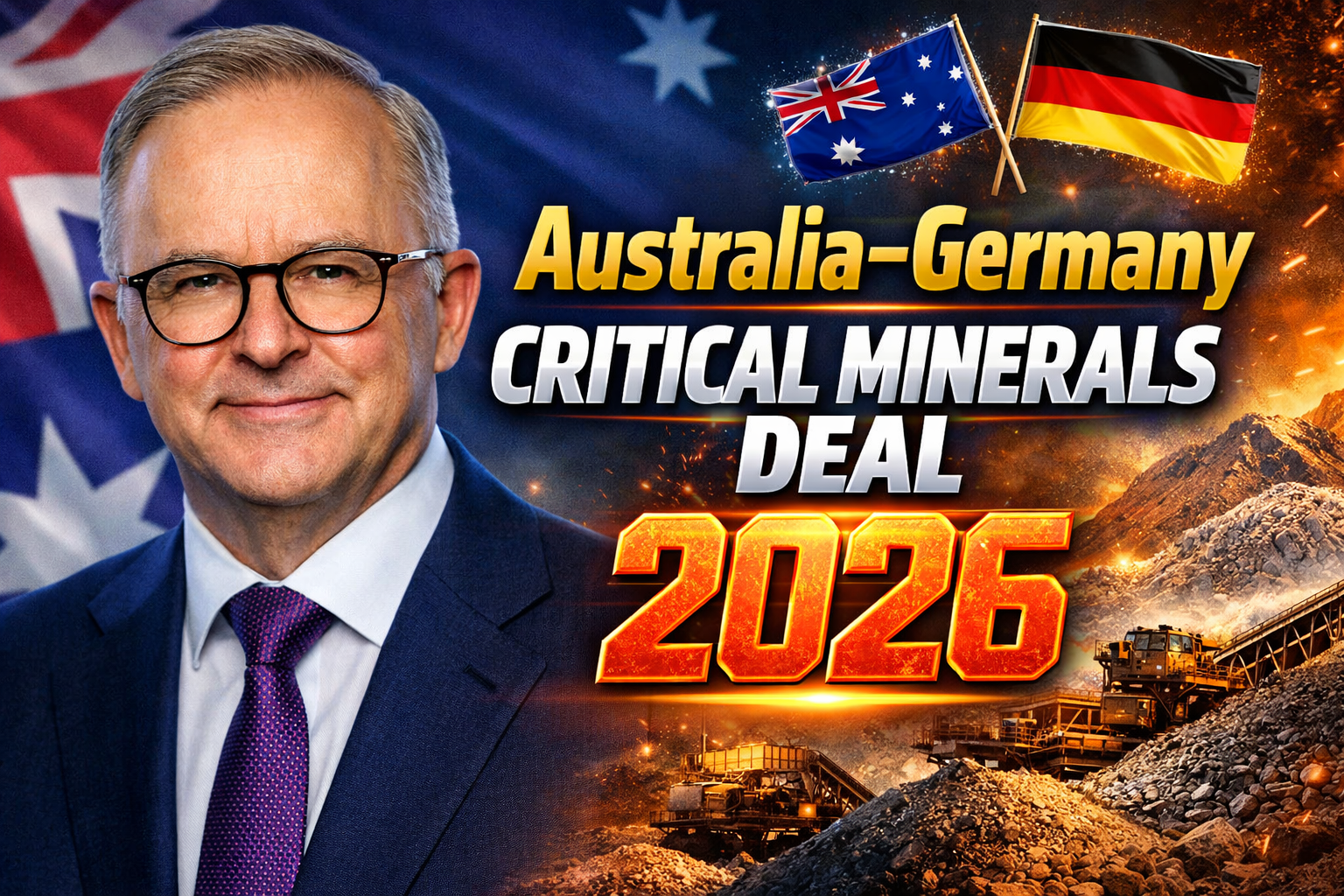
Australia and Germany have taken a significant step forward in their strategic partnership through a new critical minerals deal focused on lithium trade, announced amid ongoing negotiations for an EU free trade agreement. This collaboration addresses global supply chain vulnerabilities, particularly in the electric vehicle and renewable energy sectors, positioning both nations as key players in the green transition.
Introduction
The critical minerals deal between Australia and Germany marks a pivotal moment in international resource diplomacy. As demand for lithium surges due to the global shift toward electric vehicles and clean energy technologies, both countries recognize the need to diversify away from concentrated supply sources. Germany, Europe’s industrial powerhouse, relies heavily on imported raw materials for its automotive giants like Volkswagen and BMW, while Australia boasts vast reserves of high-quality lithium deposits.
This agreement builds on years of groundwork, including earlier declarations of intent and bilateral talks. It comes at a time when geopolitical tensions have highlighted the risks of over-dependence on single suppliers. The deal not only promises enhanced lithium trade flows but also accelerates progress toward a broader Australia-EU Free Trade Agreement (FTA), potentially unlocking billions in economic value.
Background on Critical Minerals Cooperation
Historical Context
Bilateral ties in the minerals sector date back several years, with initial agreements laying the foundation for deeper collaboration. Australia has long been a global leader in mining, home to some of the world’s largest lithium mines, while Germany seeks stable partners to fuel its energy transition goals. Past joint studies have explored value chains for processing and refining, emphasizing sustainable practices.
Recent diplomatic meetings in Canberra brought foreign ministers together to prioritize economic security through raw materials partnerships. These discussions underscored shared interests in rare earth elements and lithium, essential for batteries, magnets, and electronics. The partnership reflects a mutual commitment to high environmental, social, and governance (ESG) standards, distinguishing it from less transparent supply chains elsewhere.
Global Supply Chain Challenges
The world faces a looming shortage of critical minerals as electric vehicle adoption accelerates. Lithium demand is projected to multiply several times over by the end of the decade, driven by battery production needs. Traditional suppliers dominate processing stages, creating bottlenecks and price volatility that threaten manufacturing timelines.
Australia’s advantage lies in its abundant reserves and established mining infrastructure, particularly in Western Australia. Germany’s push for diversification aligns with EU-wide strategies to secure supplies amid trade restrictions and export controls. This deal emerges as a proactive response, fostering resilience in supply chains critical to net-zero ambitions.
Key Elements of the Deal
Lithium Trade Commitments
At the core of the agreement is a framework for expanded lithium exports from Australia to Germany. Australian producers will prioritize long-term off-take agreements, ensuring steady volumes for German battery manufacturers. This includes commitments to develop joint processing facilities, reducing reliance on overseas refining.
Germany pledges investments in Australian projects, targeting upstream mining and midstream refining. Pilot programs will test integrated supply chains, from extraction in remote Australian sites to delivery at European gigafactories. These initiatives aim to stabilize prices and enhance traceability, appealing to consumers demanding ethical sourcing.
Broader Critical Minerals Scope
Beyond lithium, the deal covers rare earths like neodymium and terbium, vital for wind turbines and electric motors. Collaborative research will focus on recycling technologies and green extraction methods. Both nations plan to co-fund innovation hubs, blending Australian resource expertise with German engineering prowess.
Energy security features prominently, with discussions on hydrogen and renewable integration. Cybersecurity protocols will safeguard trade data, while climate adaptation strategies address mining’s environmental footprint. These elements create a holistic partnership extending beyond mere commodity exchange.
Progress on Australia-EU FTA
Negotiation Milestones
The critical minerals deal injects fresh momentum into stalled EU-FTA talks. Diplomats signal breakthroughs on tariff reductions for minerals and processed goods, with interim agreements paving the way for full ratification. Germany, as a key EU influencer, advocates for accelerated timelines, viewing the FTA as complementary to bilateral mineral pacts.
Recent rounds have resolved sticking points on agriculture and services, shifting focus to industrial priorities. Australia seeks greater market access for its exports, while the EU demands commitments on sustainability and labor standards. Progress reports indicate a framework could be finalized within the next year, boosting bilateral trade volumes significantly.
Economic Implications
An EU-FTA would slash duties on critical minerals, lowering costs for European importers. Australian exporters stand to gain from preferential access to a market of over 400 million consumers. Modeling suggests annual trade growth in the tens of billions, with ripple effects for jobs in mining regions.
Statistical Overview and Facts
Australia holds a commanding position in global lithium production, accounting for nearly half of worldwide supply from hard-rock mines. Major sites span thousands of hectares, yielding spodumene concentrate used in batteries. Germany’s automotive sector consumes vast quantities, supporting factories that produce millions of electric vehicles annually.
| Mineral | Australia’s Share of Global Reserves | Key Applications | Germany’s Annual Import Demand |
|---|---|---|---|
| Lithium | Over 50% | EV Batteries | Hundreds of thousands of tons |
| Rare Earths | Significant deposits | Magnets, Motors | Growing with green tech |
| Nickel | Top producer | Battery Cathodes | Essential for auto industry |
These figures highlight the symbiotic potential. Australia’s output meets about one-fifth of global lithium needs from individual flagship operations. EU battery plants, scaling up rapidly, require reliable feeds to hit production targets.
Demand forecasts paint a stark picture: lithium needs could quadruple by mid-decade, straining existing chains. Australia’s ESG-compliant mines offer a premium alternative, commanding higher prices. Germany’s investments will unlock new capacity, mitigating shortage risks.
Strategic Importance for Both Nations
Benefits for Australia
For Australia, the deal diversifies export markets, reducing exposure to volatile buyers. Western Australia and Queensland regions will see influxes of capital, spurring local jobs and infrastructure. Government-backed reserves further de-risk projects, attracting private investment.
This positions Australia as a cornerstone of Western-aligned supply chains. Long-term contracts provide revenue stability, funding further exploration. Regional communities gain from sustainable development initiatives, balancing economic growth with environmental stewardship.
Advantages for Germany and EU
Germany secures ethical, high-grade inputs for its industrial base, shielding against disruptions. The partnership bolsters EU autonomy in green technologies, aligning with bloc-wide critical raw materials acts. Investments yield returns through equity stakes and technology transfers.
Broader EU goals benefit, as Australia-EU ties strengthen collective bargaining power. German firms gain first-mover advantages in off-take rights, locking in supplies for the electrification wave. This enhances competitiveness against rivals in the global auto market.
Industry Impacts and Case Studies
Electric vehicle manufacturers stand as primary winners. German carmakers can now source lithium directly, shortening lead times and cutting costs. Australian miners report rising interest in decade-long deals, exemplified by expansions at key lithium hubs.
Renewable energy sectors will thrive, with rare earths fueling turbine production. Joint ventures in battery recycling promise circular economies, minimizing waste. One notable project south of Perth demonstrates scale, operating as a global benchmark for efficiency.
Future Outlook and Challenges
Looking ahead, the partnership eyes expansion into joint refining plants and R&D centers by decade’s end. EU-FTA ratification could catalyze similar deals across Europe. Analysts foresee Australia evolving from raw exporter to processing hub, mirroring oil value chains.
Challenges persist, including infrastructure bottlenecks and regulatory harmonization. Price fluctuations demand adaptive contracts, while community consultations ensure inclusive growth. Geopolitical shifts may test resilience, but aligned interests fortify the alliance.
Geopolitical Dimensions
This deal reshapes alliances amid great-power competition. By partnering with Australia, Germany counters dominance in mineral processing, fostering a rules-based order. It complements pacts with other stable suppliers, weaving a diversified web.
Australia leverages its resources for diplomatic leverage, enhancing Indo-Pacific security ties. The EU gains strategic depth, reducing vulnerabilities in defense-critical materials. Collective efforts promote transparency, countering opaque practices elsewhere.
Conclusion
The Australia-Germany critical minerals deal heralds a new era of collaborative prosperity, intertwining lithium trade with EU-FTA ambitions. It addresses pressing global needs while delivering tangible economic gains. As both nations advance, this partnership exemplifies how resource diplomacy can drive sustainable progress.

Lance Evans is a contributor at CSKHYBER.co.nz covering New Zealand and Australia news, with a focus on trending updates and public-interest stories.