
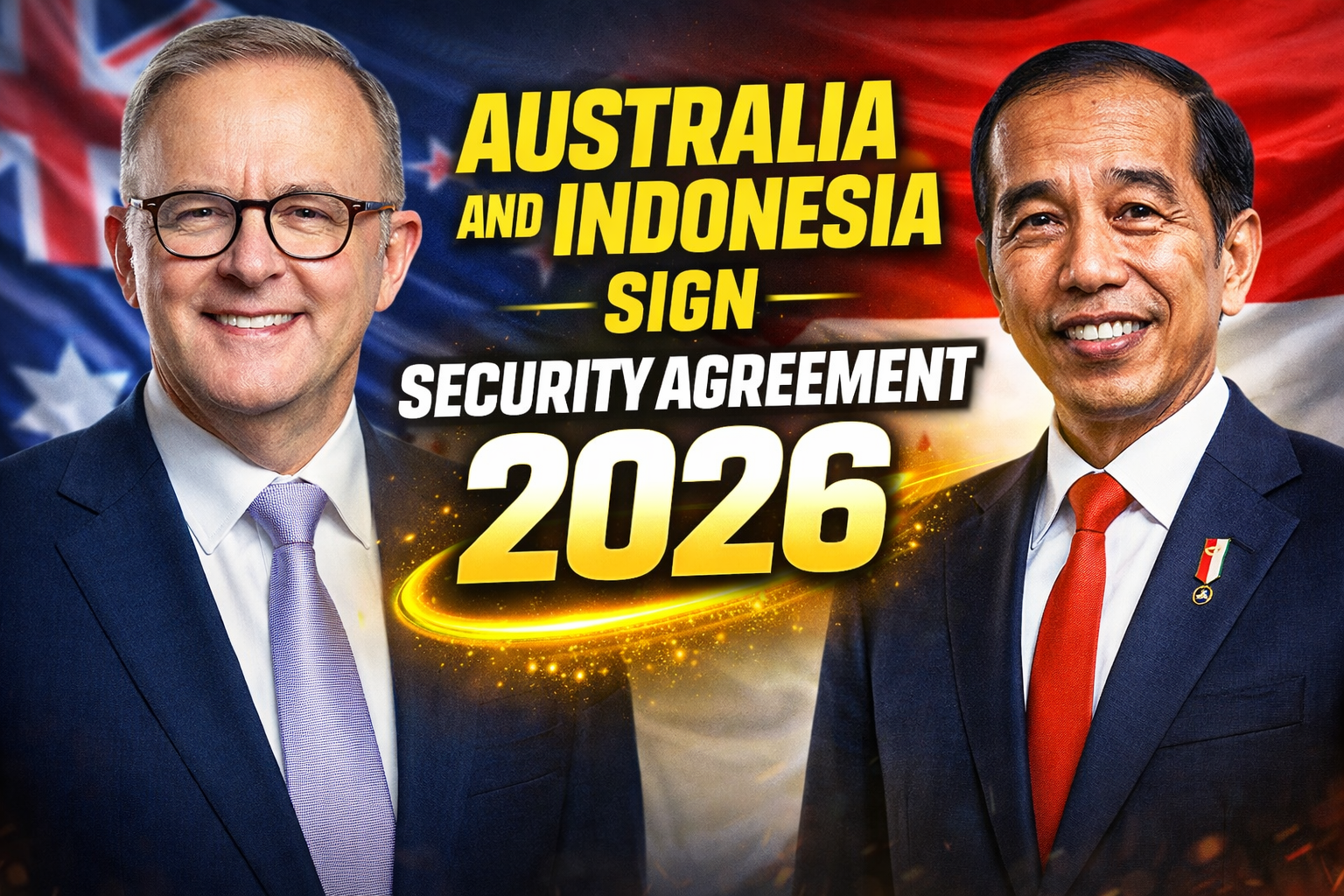
Australia and Indonesia have forged a landmark security pact in early 2026, marking a bold step in their evolving partnership. Signed in Jakarta amid rising Indo-Pacific tensions, the Treaty of Jakarta elevates military ties between these neighboring giants, promising deeper consultations and joint operations to safeguard regional stability.
Background of Australia-Indonesia Relations
The relationship between Australia and Indonesia has navigated highs and lows since World War II cooperation. Early post-colonial years saw friction over West Papua and East Timor interventions, but the 1995 Agreement on Maintaining Security under Prime Minister Paul Keating and President Suharto laid foundational trust. The 2006 Lombok Treaty expanded counterterrorism and maritime efforts post-Bali bombings, fostering intelligence sharing that thwarted plots.
Trade volumes have ballooned, with two-way goods hitting record highs, underpinned by a Comprehensive Strategic Partnership declared in recent years. People-to-people links thrive through student exchanges and tourism, yet security remains pivotal given shared sea lanes handling half the world’s trade. Presidents Anthony Albanese and Prabowo Subianto built personal rapport during Prabowo’s Sydney visit late last year, announcing the treaty’s near-completion.
This pact arrives as both nations grapple with China’s assertive South China Sea claims and non-traditional threats like cyber incursions and illegal fishing. It signals maturity, prioritizing mutual defense over historical suspicions.
Details of the Treaty of Jakarta 2026
Formally inked on a crisp February morning at Merdeka Palace, the treaty commits both parties to regular leader-level and ministerial consultations on security matters. Key provisions mandate immediate talks if either nation’s sovereignty faces threats, exploring individual or collective responses. Unlike binding defense pacts like ANZUS, it emphasizes non-escalatory cooperation, respecting Indonesia’s non-aligned stance.
The agreement builds explicitly on predecessors, incorporating defense cooperation arrangements from 2024. It promotes joint activities in priority areas, from maritime patrols to capacity building, without mandating automatic intervention. Publicly hailed as a “watershed moment” by Albanese, Prabowo echoed sentiments of “destined neighbors” building on “mutual trust and good faith.”
Classified annexes likely detail operational protocols, but open provisions spotlight interoperability—embedding Indonesian officers in Australian command structures and vice versa.
Key Military Cooperation Initiatives
The treaty unlocks ambitious programs. Australia pledges to host a senior Indonesian liaison officer within its Defence Force headquarters, enhancing real-time intelligence fusion. Reciprocal placements in Jakarta will streamline crisis response, drawing from successful U.S.-Australia models.
Joint training facilities gain priority funding. Expanded exercises like Predator’s Gallery—annual amphibious drills—will incorporate Indonesian marines, focusing on disaster relief and anti-piracy. Military education exchanges double scholarships at academies such as the Australian Defence Force Academy and Indonesia’s National Defence University, fostering officer camaraderie.
New maritime domain awareness initiatives deploy shared surveillance assets over the Arafura Sea, combating illegal fishing that costs Indonesia billions annually. Cyber defense working groups address hybrid threats, pooling expertise against state-sponsored hacks.
| Cooperation Area | Specific Measures | Expected Outcomes |
|---|---|---|
| Personnel Exchange | Embedded officers in HQs | Faster decision-making in crises |
| Joint Training | Expanded exercises, new facilities | Improved interoperability |
| Maritime Patrols | Shared assets in key sea lanes | Reduced illegal activities |
| Education Programs | Doubled scholarships | Long-term leadership ties |
| Cyber Security | Joint working groups | Enhanced threat resilience |
This table outlines core pillars, balancing immediate gains with enduring bonds.
Strategic Context in the Indo-Pacific
Geopolitics drives urgency. China’s “nine-dash line” overlaps Indonesia’s Natuna Islands exclusive economic zone, sparking naval standoffs. Australia, via AUKUS submarines and Quad partnerships, counters gray-zone tactics, but Jakarta prefers equidistance. The treaty reassures Indonesia without alienating Beijing, aligning with Prabowo’s “global south” diplomacy.
North Korea’s missile tests and Myanmar’s instability add layers, while climate change amplifies humanitarian needs—think HADR operations post-cyclones. Both militaries eye hybrid warfare, blending conventional forces with drones and AI-driven analytics.
Economically, secure sea lanes protect Australia’s iron ore exports and Indonesia’s palm oil shipments, underpinning growth trajectories above five percent regionally.
Implications for Regional Security Architecture
The pact reshapes alliances. It complements ASEAN frameworks without supplanting them, bolstering Indonesia’s leadership ambitions. Australia diversifies beyond Five Eyes, hedging U.S. reliability amid domestic debates.
Opponents like China may decry encirclement, but treaty language stresses “peace and stability,” echoing Keating-Suharto pragmatism. Smaller neighbors—Papua New Guinea, Timor-Leste—eye similar pacts, potentially birthing a loose maritime coalition.
Critics in Australia’s Labor left question AUKUS synergies, fearing provocation, while Indonesian nationalists scrutinize sovereignty clauses. Bipartisan support in Canberra and Jakarta’s DPR suggests durability.
Reactions from Key Stakeholders
Albanese lauded deepened trust, announcing initiatives during Wong’s flank. Prabowo positioned it as a “key pillar” for Indo-Pacific calm, tying to his defense modernization.
Opposition Leader Sussan Ley welcomed enhancements but urged transparency on costs. Analysts like Muhibbudin Panggabean praise strategic depth; skeptics worry overreach into domestic affairs.
Public sentiment warms—polls show seventy percent Australian approval for closer ties, up from past lows. Indonesian media frames it as pragmatic neighborliness.
Historical Precedents and Lessons Learned
Echoing 1995’s Keating-Suharto deal—signed amid Timor tensions—this treaty modernizes without overpromising. Lombok’s post-2002 success, neutralizing Jemaah Islamiyah cells, proves value. Failures like Timor interventions teach consultation over unilateralism.
Prabowo’s Suharto ties—former son-in-law—infuse nostalgia, but democratic evolutions demand accountability.
Challenges and Potential Risks
Implementation hurdles loom. Budget constraints pinch both—Australia’s defense spend hits two percent GDP target; Indonesia modernizes with Rafales and FREMM frigates. Cultural-military gaps require bridging, from command styles to ethical training.
Domestic politics test resilience. Prabowo’s coalition fragility and Australia’s election cycle could stall ratifications. External shocks—Taiwan flare-ups—might strain neutrality pledges.
| Potential Challenges | Mitigation Strategies | Risk Level |
|---|---|---|
| Budget Shortfalls | Phased rollouts, joint funding | Medium |
| Political Shifts | Bipartisan endorsements | Low |
| External Pressures | Neutral treaty language | High |
| Interoperability Gaps | Sustained training | Medium |
Navigating these ensures longevity.
Economic Dimensions of Enhanced Ties
Security underpins prosperity. Joint ventures in shipbuilding—think Arafura-class patrols—create jobs. Defense exports, from Bushmaster vehicles to pilot training, diversify Australia’s arms trade beyond F-35s.
Tourism and investment flow freer with stability; critical minerals partnerships tap Indonesia’s nickel reserves for EV batteries.
Broader Impacts on Global Order
This treaty signals multipolarity. As U.S. pivots westward, middle powers like Australia and Indonesia anchor stability, diluting great-power binaries. It inspires India-Indonesia maritime ties and Pacific Island engagements.
For ASEAN centrality, Jakarta gains heft, countering Vietnam’s China frictions.
Stats and Facts Highlighting Significance
Bilateral trade exceeds fifty billion dollars annually, with security pacts correlating to tenfold growth since 1995. Shared maritime zones span millions of square kilometers, hosting vital chokepoints. Joint operations have interdicted thousands of tons of illegal catch yearly.
Indonesia’s defense budget surges twenty percent under Prabowo; Australia’s nears sixty billion dollars. Personnel exchanges involve hundreds annually across services.
Future Outlook and Expansion Opportunities
Ratification expected by mid-year, with first consultations pre-scheduled. Horizon scans include space domain awareness and AI ethics accords. Humanitarian stockpiles in Darwin and Surabaya pre-position for rapid response.
Long-term, treaty evolution could encompass economic security, mirroring EU models.
Pathways for Public Engagement
Both governments launch awareness campaigns—town halls in Darwin, seminars in Makassar. Youth forums blend sports diplomacy with security education, echoing Bali Peace Park initiatives.

Lance Evans is a contributor at CSKHYBER.co.nz covering New Zealand and Australia news, with a focus on trending updates and public-interest stories.