
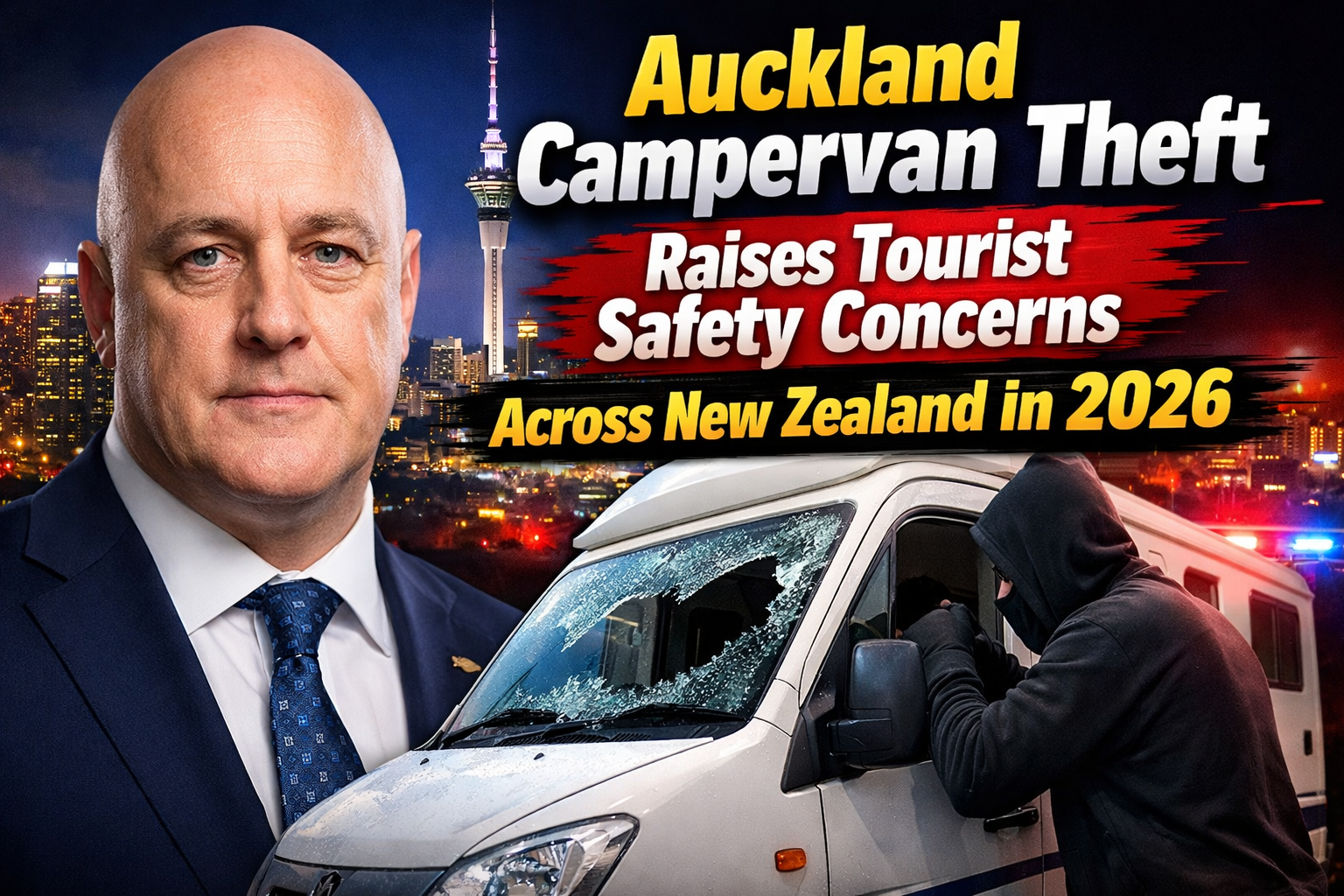
A recent campervan theft in Auckland has put a fresh spotlight on tourist safety across New Zealand, shaking the confidence of visitors who had long regarded the country as a relaxed, low‑crime destination. In 2026, what used to feel like a minor nuisance has increasingly taken on the shape of a recurring pattern, with campervans and motorhomes becoming magnets for opportunistic theft, break‑ins, and even organised targeting. The incident in Auckland has become a symbol of a wider concern: if a rented campervan can vanish from a popular city parking area, what does that mean for travellers exploring the country’s remote roads and freedom‑camping spots?
What Happened in Auckland
While the exact details of each individual case differ, recent reports and complaint patterns suggest a familiar scenario. A European tourist family, on a multi‑week road trip through the North Island, parked their rented campervan overnight not far from downtown Auckland, assuming the busy urban environment would be safer than a dark roadside in the countryside. The next morning, the vehicle was gone. Along with the van, the thieves took passports, cameras, laptops, and other travel documents, leaving the tourists stranded, distressed, and scrambling to contact their rental company, police, and embassy.
What has elevated this pair of incidents from isolated mishaps to a national talking point is that they are not unique. Campervan thefts, thefts from campervans, and break‑ins of holiday vehicles have been rising steadily over the past few years, particularly in high‑traffic areas such as Auckland, Rotorua, Queenstown, and key tourist corridors along the North and South Islands. The 2026 offences in and around Auckland have become the latest flashpoint, prompting both local police and tourism‑industry bodies to issue updated safety warnings specifically aimed at international visitors.
Why Campervans Are Targeted
Campervans and motorhomes are attractive targets for more than one reason. First, they are expensive to rent and often equipped with high‑value gear: upgraded electronics, GPS units, camera equipment, and sometimes even small appliances. Second, they are frequently left unattended for long periods, especially at scenic viewpoints, trailheads, coastal car parks, and roadside “freedom‑camp” spots. That makes them ideal for opportunistic thieves who can move in quickly and quietly.
There is also a third factor: many campervans are visibly filled with travel gear. Luggage, cooler‑boxes, and outdoor equipment left in plain sight signal that the vehicle is likely to carry passports, cash, and cards. Even if the main target is the van itself, thieves often ransack the interior for anything loose and movable. For tourists, the result is often a double blow: the loss of the transportation they rely on, plus the loss of crucial documents and money needed to keep their trip going.
The Bigger Picture of Vehicle Crime in New Zealand
The Auckland campervan theft fits into a broader pattern of rising vehicle‑related crime. New Zealand’s insurance industry and police data show that Auckland remains the region with the most vehicle thefts, followed by major centres such as Christchurch, Wellington, and Hamilton. While the overall national crime rate has eased since a peak in 2023, thefts from vehicles and of vehicles have remained stubbornly common, particularly in urban fringe areas and popular tourist zones.
Campervan thefts are not the only issue; break‑ins of rental cars, motorhomes, and even private RVs parked at home have also increased. Rental companies and camper‑van owners have reported more cases where vehicles are stolen from private driveways, small suburban streets, or budget parking lots that lack surveillance and security patrols. The combination of higher demand for campervan travel, tight rental stock, and visible wealth inside these vehicles has created a perfect environment for criminal activity.
How Tourists Are Reacting
For many international visitors, especially first‑time road‑trippers, the theft of a campervan feels like a personal betrayal of New Zealand’s reputation as a safe, welcoming country. Social‑media forums and travel‑review sites have seen a noticeable uptick in posts asking whether campervan travel is still worth the risk, with some travellers sharing stories of windows smashed, gear vanished overnight, or entire vehicles disappearing from official‑looking parking areas.
Some tourists are now opting for more conventional hotel stays instead of freedom‑camping, partly out of concern that unregulated roadside spots carry too much risk. Others are choosing to park only in guarded holiday parks and secure campgrounds, even if it means paying higher nightly fees. A growing number are also carrying extra insurance, tracking devices, or even physical security upgrades—locks, steering‑wheel clamps, and GPS trackers—on rented vehicles, even when the rental company does not insist on it.
What Rental Companies and Police Are Doing
In response to the rising number of incidents, campervan rental companies are tightening their protocols. Many have begun inserting clauses that more explicitly outline guest responsibilities: keeping doors locked, not leaving valuables visible, and parking only in designated, secure areas. Some operators are also installing built‑in GPS trackers on their fleets, which can alert both the company and authorities the moment a vehicle is moved outside approved zones or ignition codes.
Police have been more cautious, emphasising that violent crime against tourists remains rare and that most campervan‑related incidents fall under property theft and break‑in categories. However, they have also stepped up targeted operations in areas known to have higher rates of vehicle break‑ins and thefts. In Auckland and other cities, local police have launched public‑awareness campaigns urging tourists to:
- Avoid leaving any valuables in sight inside campervans or cars.
- Park in well‑lit, populated areas, preferably within view of security cameras or holiday‑park staff.
- Keep passports, cash, and cards in lockable storage inside the vehicle or on the person, never in dash storage or glove boxes.
- Report any suspicious activity around parked vehicles immediately by calling 111.
Tourism bodies have echoed this advice, often packaging it into short, easy‑to‑scan guides for overseas visitors who may not be familiar with New Zealand’s local crime patterns.
Practical Safety Tips for 2026 Travellers
For anyone planning a campervan trip in New Zealand in 2026, the Auckland thefts are a reminder that basic precautions can make a big difference. There are several straightforward steps that can significantly reduce the risk of theft or break‑in:
- Never leave your campervan unlocked, even if you will only be away for a few minutes. Thieves often wait for quick opportunities when owners step out for fuel, food, or a short walk.
- Hide all valuables from view. Use internal lockers, under‑bed storage, or even small lockboxes to keep cameras, laptops, and documents out of sight.
- Avoid overnight parking in isolated or poorly lit areas unless they are official, monitored campgrounds or holiday parks. If you must stop in a remote spot, choose locations that are clearly marked as safe and popular with other travellers.
- Use additional security devices, such as wheel clamps, hitch locks, or steering‑wheel locks, if available. Many rental companies now offer or recommend these as add‑ons.
- Consider a portable GPS tracker or SmartKey device that can be hidden in the vehicle and monitored through a smartphone app. If the van is stolen, this can dramatically speed up recovery efforts.
- Make digital copies of important documents and keep them in a cloud account or email a copy to a trusted contact. This way, even if passports are stolen, you are not left without any proof of identity.
How This Affects New Zealand’s Image as a Destination
New Zealand has long marketed itself as an adventure‑driven, self‑drive paradise. Campervan travel is a core part of that brand, allowing tourists to explore remote coastlines, national parks, and mountain passes on their own schedule. The rise in thefts threatens to erode that image, at least in the eyes of some cautious travellers. If repeated stories of stolen vehicles and broken‑into vans dominate online forums and social‑media feeds, more visitors may begin to perceive the country as riskier than they once thought.
However, the response from both the public and private sectors so far suggests that the intention is not to scare tourists away, but to adapt to a changing security landscape. Rental companies are investing in better technology, police are issuing clearer guidance, and tourism boards are explaining that while thefts do occur, the overall risk of violence remains low. The message is essentially twofold: New Zealand is still a safe destination, but visitors should no longer treat campervan travel as a carefree, risk‑free experience.
The Way Forward for Tourist Safety
The Auckland campervan theft in 2026 is likely to be remembered as one of the incidents that forced a new level of awareness around tourist safety in New Zealand. It has prompted rental companies to tighten security, tour operators to revise their safety briefings, and potential visitors to research crime patterns before hitting the road. For the country as a whole, it is a reminder that even in a relatively low‑crime environment, organised and opportunistic theft can flourish in areas with high tourist traffic and visible property.
Going forward, the challenge will be to balance the freedom that campervan travel represents with the need for stronger safeguards. This may mean more investment in secure parking infrastructure, better coordination between rental companies and local police, and more consistent public‑education campaigns that reach both domestic and international travellers. For tourists, the lesson is simple: treat a campervan as both a home and a valuable asset, lock it up, hide your belongings, and stay informed. With the right precautions, the freedom of the open road in New Zealand can still be enjoyed—even as the country learns how to keep that freedom safer for everyone.

Lance Evans is a contributor at CSKHYBER.co.nz covering New Zealand and Australia news, with a focus on trending updates and public-interest stories.