
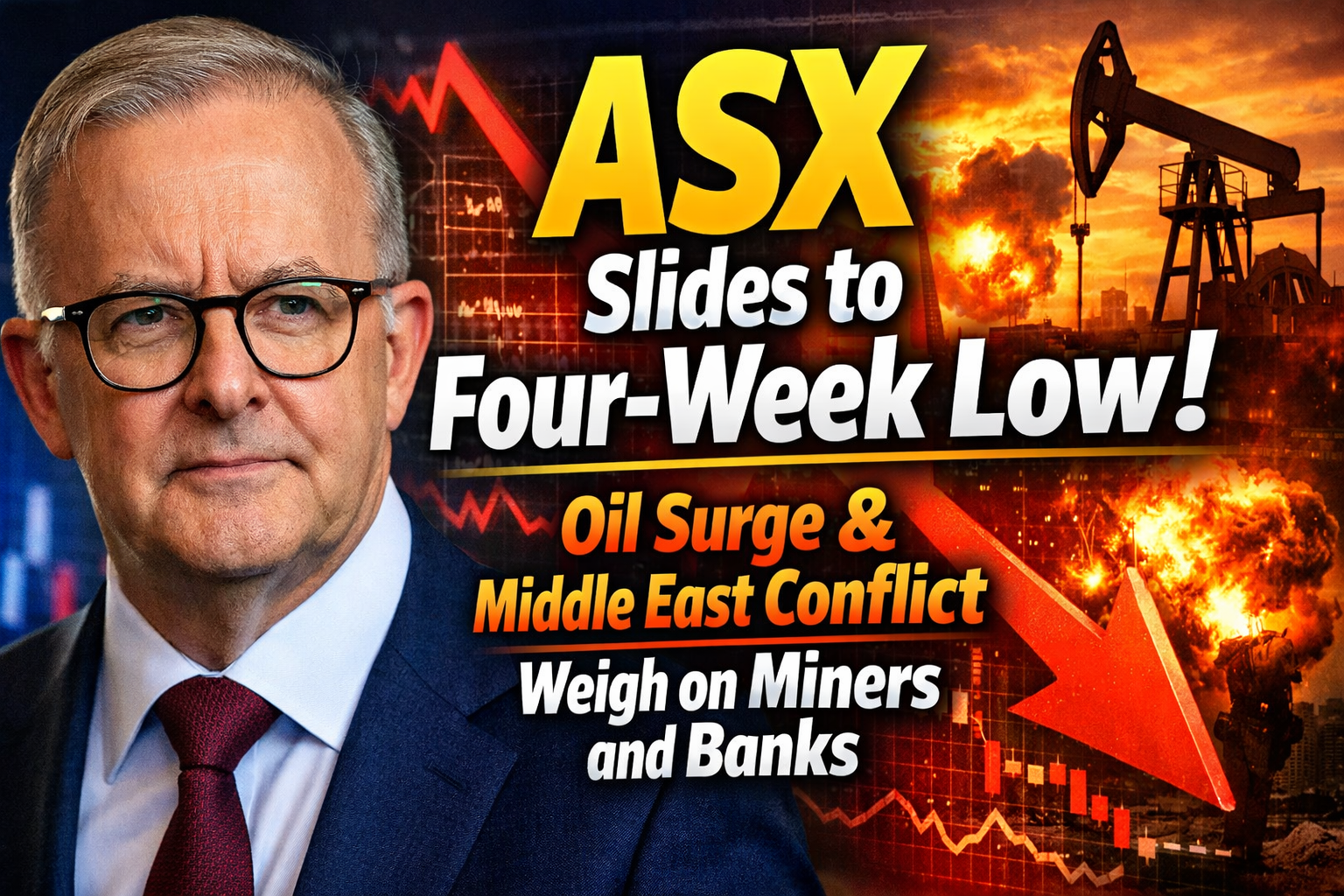
The Australian Securities Exchange has tumbled to its lowest point in four weeks, gripped by escalating tensions in the Middle East and a sharp surge in oil prices. Investors are reeling as miners and major banks bear the brunt of the sell-off, sparking fears of broader economic ripple effects across the region.
Introduction
Global markets are on edge as fresh conflict in the Middle East disrupts energy supplies and ignites inflation worries. The ASX 200 index, a barometer of Australia’s economic health, has slid sharply, marking one of its weakest performances in recent months. This downturn comes amid a perfect storm of higher crude prices hammering resource-heavy sectors while uncertainty clouds banking stability.
Miners, traditionally a powerhouse on the exchange, are plummeting due to intertwined pressures from volatile commodity demand and rising input costs. Banks, sensitive to interest rate expectations and consumer spending slowdowns, are also under siege. As oil benchmarks like Brent Crude climb steeply, the knock-on effects threaten household budgets and corporate profits alike.
Current Market Snapshot
The ASX 200 has erased gains from the past month, dipping below key support levels that traders watched closely. Heavy selling accelerated through the trading week, with the benchmark closing at levels not seen in weeks. Volume spiked as institutional investors offloaded positions, signaling a shift from optimism to caution.
Key sectors tell a stark story. The materials sector, dominated by mining giants, led the decline with outsized losses. Financials followed suit, dragged down by exposure to slowing growth prospects. Energy stocks offered a rare bright spot, buoyed by the very oil rally hurting the broader market.
In tabular form, here’s how major components stacked up over the recent session:
| Sector | Weekly Change | Key Driver |
|---|---|---|
| Materials | Down sharply | Oil costs, demand fears |
| Financials | Down notably | Rate hike delays, slowdown |
| Energy | Up modestly | Crude price rally |
| Industrials | Mixed | Supply chain disruptions |
| Consumer | Down steadily | Inflation squeeze |
This table highlights the divergence: while energy players gain from higher prices, traditional ASX stalwarts suffer.
Oil Surge Fuels the Fire
Oil prices have rocketed higher, with Brent Crude piercing levels unseen in months following strikes and retaliatory actions in the Middle East. The Strait of Hormuz, a vital artery for global oil flows, faces threats that could choke supply lines. This has sent benchmark prices soaring, adding fuel to inflationary pressures worldwide.
For Australia, a net energy importer despite its resource base, the impact is immediate. Petrol prices at the pump are climbing, with households facing steeper weekly fuel bills. Refineries scramble amid supply jitters, while shipping costs balloon due to rerouted tankers avoiding risky waters.
Statistics paint a grim picture. Crude futures have jumped dramatically in days, outpacing even the most bearish forecasts. Trading volumes hit records as speculators bet on prolonged disruption. Analysts now warn of sustained highs unless diplomatic breakthroughs emerge swiftly.
Middle East Conflict’s Global Ripples
Tensions boiled over with direct strikes involving major powers, escalating a simmering standoff into open confrontation. Iran’s responses have rattled markets, with threats to key shipping lanes amplifying fears of a wider war. This isn’t just regional noise—it’s reshaping trade flows and energy security.
Global stocks have slumped in tandem, from Wall Street to Europe and Asia. Defense stocks surge as investors flock to safe havens, while airlines and travel firms crater on flight cancellations. Commodities beyond oil, like natural gas, are spiking too, hitting manufacturers and utilities.
Australia feels the heat acutely. As a trade-dependent economy, disruptions in the Gulf reverberate through export channels. Gold, often a refuge, has gained but can’t offset mining woes tied to energy costs.
Miners Under Siege
Australia’s mining sector, the ASX’s beating heart, is getting hammered. Iron ore and other bulk commodities face headwinds from pricier fuel and potential Chinese slowdowns amid global uncertainty. Operational costs soar as diesel-dependent haul trucks and processing plants eat into margins.
Major players like BHP and Rio Tinto saw shares slide amid the rout. Production updates reflect caution, with some halting expansions to preserve cash. The sector’s heavy weighting in the index amplifies the pain, pulling the entire market lower.
Here’s a breakdown of select miners’ performance:
| Company | Share Drop | Main Pressure Point |
|---|---|---|
| BHP | Significant | Fuel costs, China demand |
| Rio Tinto | Sharp | Operational disruptions |
| Fortescue | Heavy | Iron ore price volatility |
| Mineral Resources | Steep | Supply chain issues |
These firms, pillars of the economy, now grapple with a dual threat: external shocks and internal belt-tightening.
Banks Face Headwinds
The big four banks—Commonwealth Bank, Westpac, NAB, and ANZ—mirrored the miners’ woes, shedding value as investors question lending growth. Higher oil translates to costlier borrowing for households and businesses, crimping demand for mortgages and loans.
Rate cut hopes have dimmed with resurgent inflation data. Regulators eye macroprudential tightening, adding to margin pressures. Non-performing loans could tick up if energy bills squeeze consumer wallets.
Comparative table for banks:
| Bank | Decline Level | Vulnerability Factor |
|---|---|---|
| Commonwealth | Pronounced | Mortgage exposure |
| Westpac | Marked | Business lending risks |
| NAB | Considerable | Regional economic ties |
| ANZ | Substantial | Global trade sensitivity |
Bank CEOs have issued measured statements, stressing resilience but hinting at conservative outlooks.
Economic Implications for Australia
The combo of oil spikes and conflict risks a stagflation scenario: high prices without growth. Retail sales may soften as families prioritize fuel over discretionary spending. Tourism, already fragile, braces for airline surcharges.
On the fiscal side, government revenues from resource taxes could swing wildly. Budget forecasts assume stable commodities; this volatility upends them. The Reserve Bank faces a dilemma—hike rates to tame inflation or hold to support activity.
Employment in mining heartlands like Western Australia hangs in balance. Job cuts loom if projects stall. Broader GDP growth, pegged in the low range pre-crisis, now risks contraction.
Investor Sentiment and Strategies
Panic hasn’t fully set in, per strategists, but positioning has turned defensive. Funds rotate into energy and gold, away from cyclicals. Volatility gauges like the VIX equivalent for ASX are elevated, pricing in swings.
Savvy players eye dips for bargains, but many sit on sidelines awaiting clarity. Hedging via options surges. Long-term, Australia’s resource endowment offers upside if conflict de-escalates.
Looking Ahead
Diplomatic channels buzz with calls for restraint, but timelines stretch. Oil could ease if supplies reroute successfully, yet prolonged strife means pain. Watch OPEC moves and US policy under President Trump for cues.
The ASX’s fate hinges on energy stabilization and conflict resolution. Miners and banks, while battered, boast strong balance sheets to weather storms. Opportunities may emerge for contrarians amid the fear.
Conclusion
This ASX slide underscores markets’ fragility to geopolitical shocks. Oil’s surge and Middle East strife have exposed vulnerabilities in Australia’s export-driven model. Yet history shows rebounds follow such episodes, rewarding the patient.

Lance Evans is a contributor at CSKHYBER.co.nz covering New Zealand and Australia news, with a focus on trending updates and public-interest stories.