
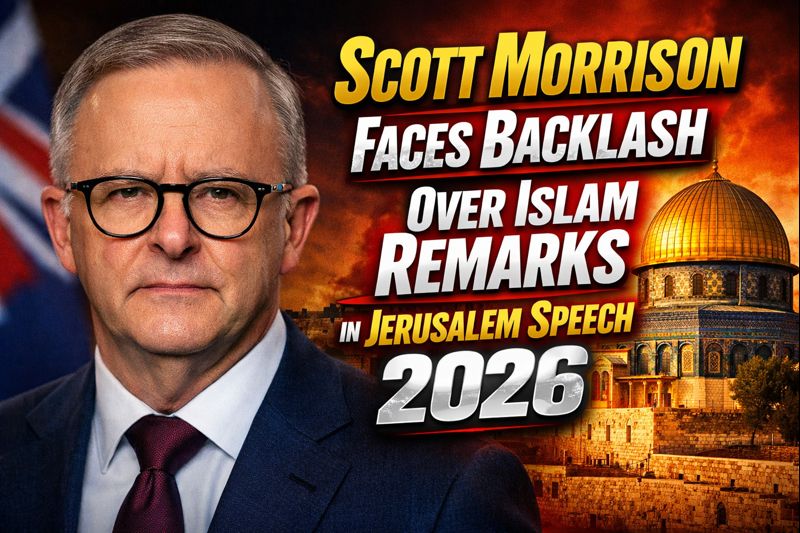
Former Australian Prime Minister Scott Morrison ignited a firestorm of controversy with pointed remarks on Islam during a high-profile speech in Jerusalem. Delivered at an antisemitism conference amid rising global tensions, his words struck a raw nerve back home, splitting opinions between those praising his candor and others decrying them as divisive and inflammatory.
Introduction
In late January 2026, Scott Morrison stepped onto the stage at the Generation Truth antisemitism conference in Jerusalem, a gathering aimed at confronting surging hatred against Jews worldwide. The event, hosted in Israel’s capital, drew politicians, activists, and faith leaders to discuss threats from extremism in the wake of the October 7, 2023, attacks and their aftermath. Morrison, no longer in office but still a towering figure in conservative circles, used the platform to warn of Australia’s vulnerability to radical influences. He zeroed in on what he termed “political Islam,” urging Muslim leaders Down Under to reform practices, accredit imams, standardize teachings, and sever ties to foreign networks he viewed as extremism vectors.
The speech, coupled with an accompanying opinion piece in a major Australian newspaper, quickly ricocheted across headlines. Muslim advocacy groups labeled it Islamophobic, accusing Morrison of scapegoating an entire community for isolated acts of violence, like the recent Bondi beach incidents. Supporters, including right-leaning commentators, hailed it as a overdue dose of reality, arguing that polite silence had allowed problems to fester. Within days, the backlash swelled, with protests, media debates, and statements from religious bodies amplifying the divide. This episode thrust Morrison back into the spotlight, testing Australia’s fragile social cohesion at a time when antisemitism and communal tensions simmered high.
What unfolded was more than a policy spat—it exposed deep fault lines in how Australia grapples with multiculturalism, security, and faith in an era of global unrest. Morrison’s intervention, bold and unapologetic, forced a reckoning: should leaders call out perceived failings within communities, or does such rhetoric risk alienating millions and fueling prejudice?
Context of the Jerusalem Conference
The Generation Truth conference emerged as a key forum for tackling antisemitism’s resurgence, particularly post-October 7. Held annually in Jerusalem, it blended speeches, panels, and workshops, attracting figures from politics, academia, and civil society. This year’s edition focused on “truth-telling” about extremism’s roots, with speakers decrying both far-left activism and Islamist ideologies as twin threats to Jewish safety.
Morrison’s appearance fit neatly into this narrative. As a vocal Israel supporter during his premiership, he had visited the country multiple times, forging ties with leaders there. His Christian faith, often highlighted in public life, underscored a personal affinity for Judaism’s biblical heritage. Speaking to an audience sympathetic to hardline views on security, Morrison framed Australia’s challenges through a lens of complacency. He contrasted Western hesitancy with Middle Eastern nations—UAE, Saudi Arabia, Egypt—that had cracked down on radical preaching, shuttering informal mosques and regulating sermons.
The timing amplified the stakes. Australia reeled from a string of violent episodes, including stabbings at Bondi attributed to individuals with no clear group ties but sparking debates on radicalization. Synagogue attacks and protests turning ugly had heightened Jewish community fears, while police ramped up counter-terror patrols. Morrison positioned himself as a truth-teller, unwilling to let political correctness mute urgent warnings.
Key Points from Morrison’s Remarks
Morrison wasted no time laying out his diagnosis. He declared Australia at risk of mirroring Britain’s struggles with “radical Islam” and eroding social bonds. Citing a post-October 7 spike in antisemitic incidents—vandalism, assaults, online vitriol—he blamed institutional failures and timid leadership for leaving the back door ajar to imported hatred.
Central to his message was a call for accountability within Muslim communities. Imams, he argued, must own the narrative in their mosques, preaching against violence explicitly and in local languages like English. He advocated national standards: licensing preachers, translating sermons, monitoring foreign funding, and dismantling underground networks that groomed extremists. “Political Islam,” echoing the Muslim Brotherhood’s influence, demanded confrontation, not accommodation.
Drawing parallels, Morrison invoked the Christchurch mosque shootings, where the perpetrator had Australian links. New Zealand owned that failure, he noted; now Muslims must confront their fringes. He rejected state control over religion but insisted communities crossing into incitement “invite” oversight. His tone blended toughness with optimism: reform from within could safeguard the million-plus Australian Muslims from corruption by radicals.
In a sidebar interview, Morrison doubled down, praising Israel’s security ethos while urging Australia to learn from Gulf states’ reforms. He framed his words not as anti-Muslim but pro-integration, aimed at preserving multiculturalism’s promise.
Backlash from Muslim Communities
The response erupted like a powder keg. The Australian National Imams Council (ANIC), representing key religious voices, branded Morrison’s speech “reckless, irresponsible, and deeply ill-informed.” They rejected any blanket blame on Islam for violence, pointing to police statements absolving communities in cases like Bondi. Holding a faith group accountable for lone actors, they warned, shreds social fabric and panders to fearmongers.
ANIC recalled Morrison’s history: post-2018 Bourke Street rampage, he had chided Muslim leaders for not spotting radicals sooner. Now, from abroad, he revived that script, they said, exploiting tragedy for relevance. Community leaders mobilized, with mosques issuing statements disavowing extremism and highlighting everyday contributions—charity drives, interfaith dialogues.
Protests flared in Sydney and Melbourne, where hundreds rallied against “Islamophobia from the top.” Social media buzzed with #MorrisonDivides, amplifying personal stories of discrimination spikes after his words. Prominent Muslims, from doctors to business owners, voiced hurt, arguing it painted them as suspects in their own country.
Here’s a breakdown of major responses:
| Group/Figure | Stance | Key Quote/Position |
|---|---|---|
| ANIC | Strong condemnation | “Reckless… exploits public fear” |
| Australian Federation of Islamic Councils | Calls for unity, rejects blame | “Terrorism has no faith basis” |
| Sydney protesters | Anti-Islamophobia marches | “Stop scapegoating minorities” |
| Individual imams | Defend community role in deradicalization | “We already police our own” |
| Labor MPs | Criticize as dog-whistling | “Divides when we need healing” |
This table captures the spectrum, from institutional rebukes to grassroots fury.
Support and Counterarguments
Not everyone recoiled. Conservative media outlets like Sky News lauded Morrison as having “a brain and a spine.” Hosts praised him for putting leaders “on notice,” arguing violence’s persistence—whether inherent or perverted—demanded action. They framed his reforms as common sense: accredit teachers like secular ones, translate texts for transparency, curb Saudi-funded Wahhabism.
Pentagon-aligned commentators echoed this, noting Gulf reforms had muted extremism without mass backlash. Jewish groups, scarred by antisemitism waves, appreciated the linkage: ignoring “political Islam” emboldens all hatred. Morrison’s allies portrayed critics as defensive, dodging introspection.
Polls hinted at traction. Informal surveys showed majority support among over-45s for tougher oversight, especially post-Bondi. Ex-police chiefs nodded to unregulated preaching as a blind spot, urging balance between rights and safety.
Political Ramifications in Australia
The saga rippled through Canberra. Prime Minister Albanese’s government trod carefully, affirming multiculturalism while backing police probes. Labor figures distanced themselves, labeling Morrison’s tone unhelpful amid deradicalization efforts. Yet some quietly agreed reforms were overdue.
Opposition Leader Dutton, eyeing polls, praised Morrison’s “leadership,” hinting at policy echoes. It handed Liberals ammunition: frame Labor as soft on security. Muslim voters, pivotal in western Sydney seats, felt betrayed, potentially swaying elections.
Internationally, it spotlighted Australia’s debates. Israel hailed Morrison; UK voices saw parallels to their own struggles. Domestically, it spurred calls for an inquiry into radical preaching, weighing free speech against public safety.
Broader Implications for Multiculturalism
Morrison’s speech crystallized tensions in Australia’s melting pot. Home to thriving Muslim, Jewish, and Christian communities, the nation prides itself on harmony—until flashpoints erupt. His words challenged the post-9/11 compact: condemn terror, but don’t stereotype.
Critics fear a slippery slope: regulate one faith, then others? Supporters counter that Islam’s unique global jihad links warrant scrutiny. Data underscores risks—antisemitic incidents quadrupled since 2023, often near pro-Palestine rallies—yet most Muslims live peaceably.
Stats paint a nuanced picture. Of Australia’s 800,000 Muslims, tiny fractions radicalize, per ASIO. But undetected networks persist, fueled by apps and travel. Morrison’s push highlights trade-offs: vigilance versus alienation.
| Aspect | Pre-Speech Stats | Post-Speech Trends |
|---|---|---|
| Antisemitic Incidents | 300+ annually (2025) | 20% weekly rise |
| Muslim Population | 3.2% of total | Integration rates high (90%+) |
| Terror Probes | 15 active (ASIO) | Bondi unrelated per police |
| Public Concern | 40% worry extremism | Support for reform: 55% |
These figures, drawn from recent reports, reveal heightened anxiety.
Morrison’s Defense and Future Outlook
Unbowed, Morrison clarified: he targeted extremism, not believers. In interviews, he stressed empowering mainstream Muslims against fringes, citing Christian self-policing post-Christchurch. He vowed to keep speaking, eyeing a post-political advocacy role.
As dust settles, expect ripple effects. Imams may accelerate English sermons; governments, oversight talks. Yet trust frays, demanding bridge-builders. Australia’s path forward hinges on dialogue—honest, tough, inclusive.
This clash underscores a pivotal truth: in diverse societies, silence on hard issues breeds resentment; blunt talk risks explosion. Morrison gambled big, reshaping debates on faith, security, and nationhood. Whether it heals or hardens divides, only time reveals.

Lance Evans is a contributor at CSKHYBER.co.nz covering New Zealand and Australia news, with a focus on trending updates and public-interest stories.