

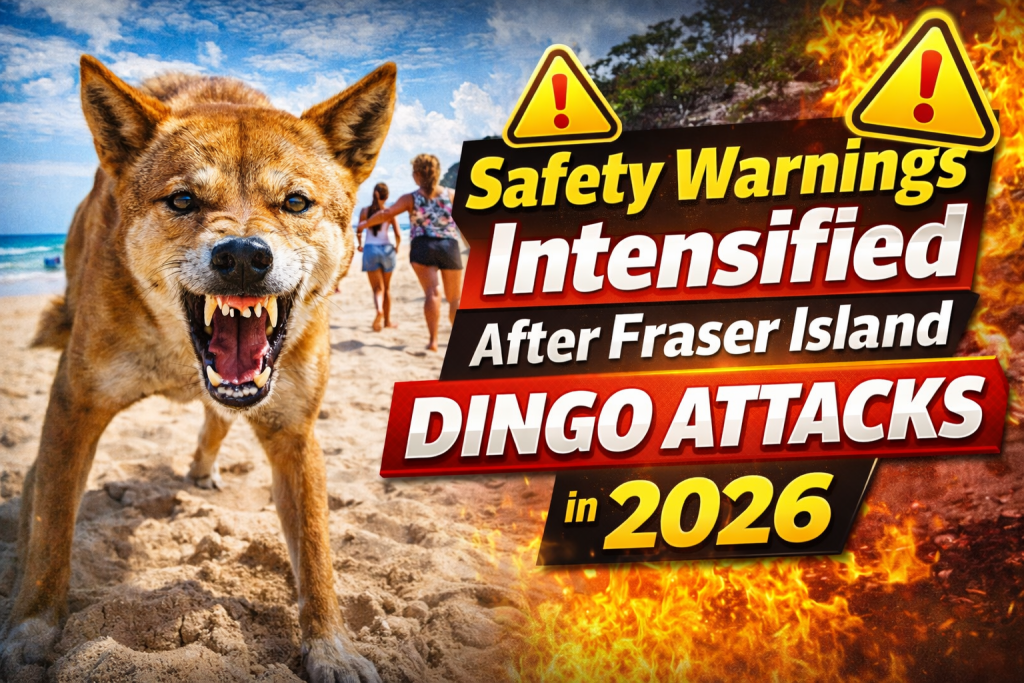
K’gari (Fraser Island) authorities escalated dingo safety warnings in early 2026 after a cluster of aggressive encounters, including child chases and food thefts from campsites. Rangers attribute bold behavior to visitor non-compliance like feeding and littering, heightening risks on this UNESCO site. Families and solo travelers now face mandatory briefings to protect both humans and the island’s 200-plus dingo population.
Surge in 2026 Incidents
January reports detailed five serious interactions: dingoes snatching bags from beaches, shadowing joggers, and nipping at unsecured tents. A toddler’s narrow escape near Cathedral Rocks prompted immediate campground shutdowns. No severe injuries, but patterns mirror 2001’s fatal attack, spurring action.
Patrols tripled, with helicopters aiding surveillance. Fines hit AUD 5,000+ for feeding violations, up from prior years.
Updated Safety Measures
Queensland Parks mandates seven rules upon entry: secure food/rubbish in locked vehicles or bins, never feed or approach, travel in groups of four+, supervise kids within arm’s reach, carry sturdy sticks, avoid dusk/dawn solos, report all sightings.
Ferry arrivals trigger video briefings; apps deliver geo-fenced alerts. Drones haze habituated dingoes with noise/light.
| Rule Category | Key Actions | Enforcement |
|---|---|---|
| Food Security | Lock all edibles, use bear bins | Daily ranger checks |
| Group Dynamics | Minimum 4 people, no running | Fines for solos |
| Child Protection | Constant supervision | Zero-tolerance zones |
| Deterrence Tools | Carry 1m sticks | Provided at hubs |
Root Causes Analyzed
Habituation stems from tourists’ scraps amid prey scarcity from dry spells. Off-road traffic fragments habitats, drawing packs to trails. Pups mimic parents’ boldness, perpetuating cycles.
Non-lethal management prioritizes: hazing, relocation, rare euthanasia for serial offenders. Butchulla Traditional Owners advocate respect, viewing dingoes as totemic guardians.
Visitor and Economic Ripple Effects
Bookings dipped 15% initially, but compliant tourism rebounds via guided safaris. Revenue tops AUD 100 million yearly; safety sustains it. Influencers fined for risky posts amplify education.
Feedback praises faster responses, fewer beach sightings post-crackdown.
Historical Parallels
Post-2001 strategy curbed attacks via fences and fines, euthanizing 20+ dingoes. 2023 spikes echoed here, resolved by closures. Genetics show purebred health, no hybrids.
Research collars track 50 animals, modeling interventions.
Expert Recommendations
Camp elevated, store food 100m away. Walk assertively, yell if approached. Families choose ranger-led walks. Apps like DingoWatch log incidents.
Long-Term Conservation
Population stable at 180-220; programs boost native prey via feral control. Tech like AI cameras predicts hotspots. Visitor caps debated for sustainability.
Warnings restore wariness—zero incidents targeted by quarter-end. K’gari thrives when humans yield to wild rhythms, preserving dingo majesty for generations.

Lance Evans is a contributor at CSKHYBER.co.nz covering New Zealand and Australia news, with a focus on trending updates and public-interest stories.